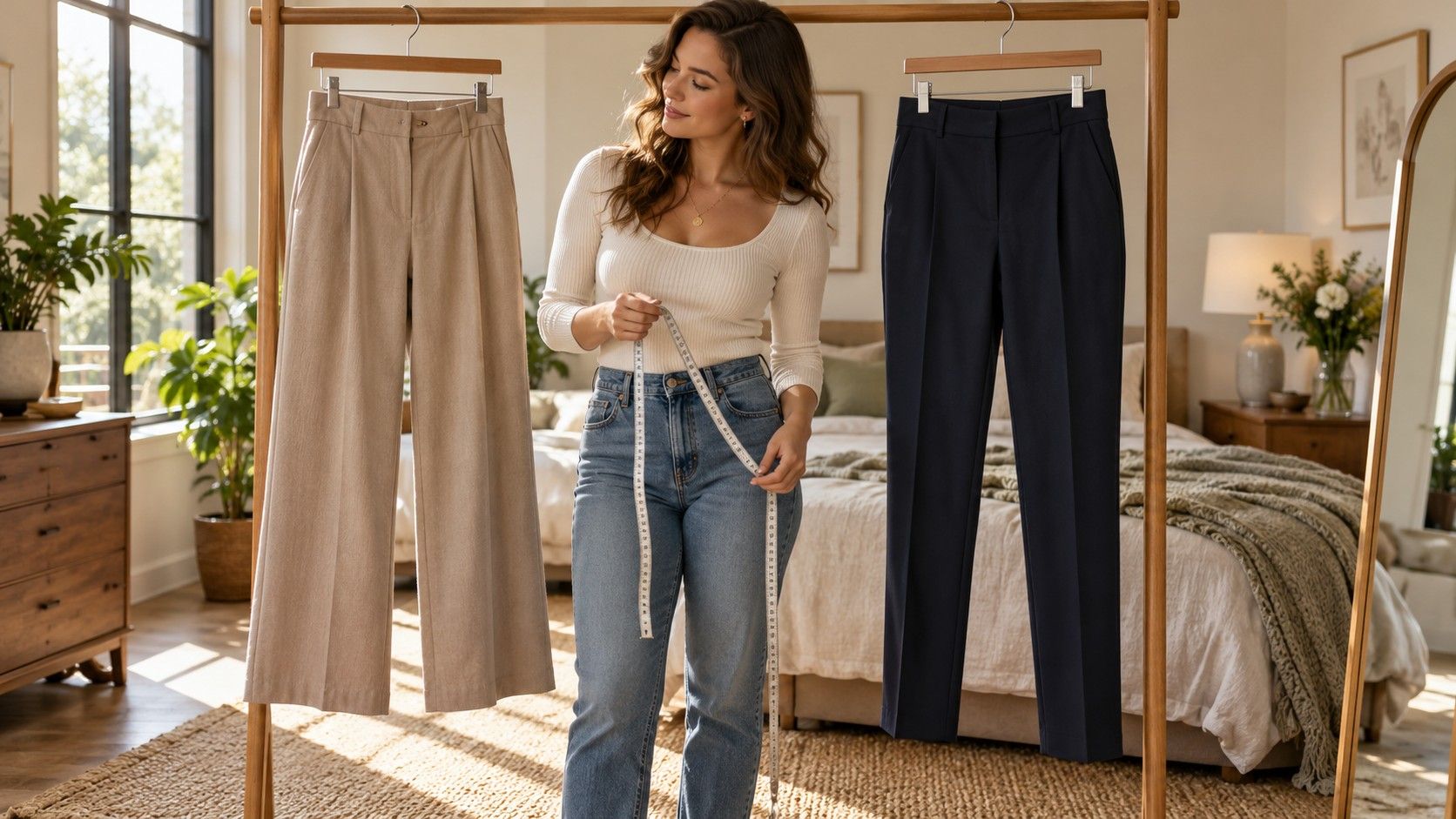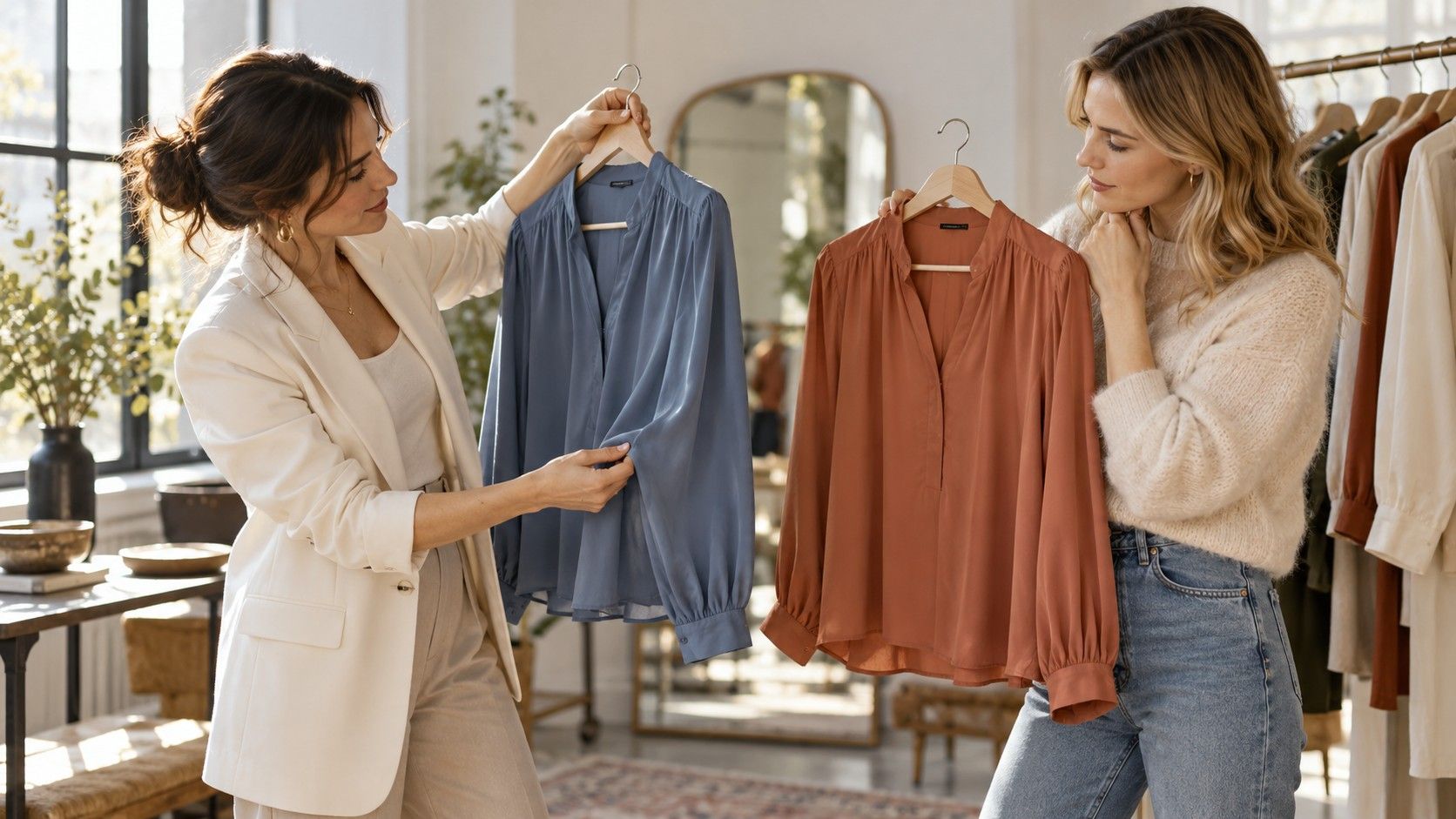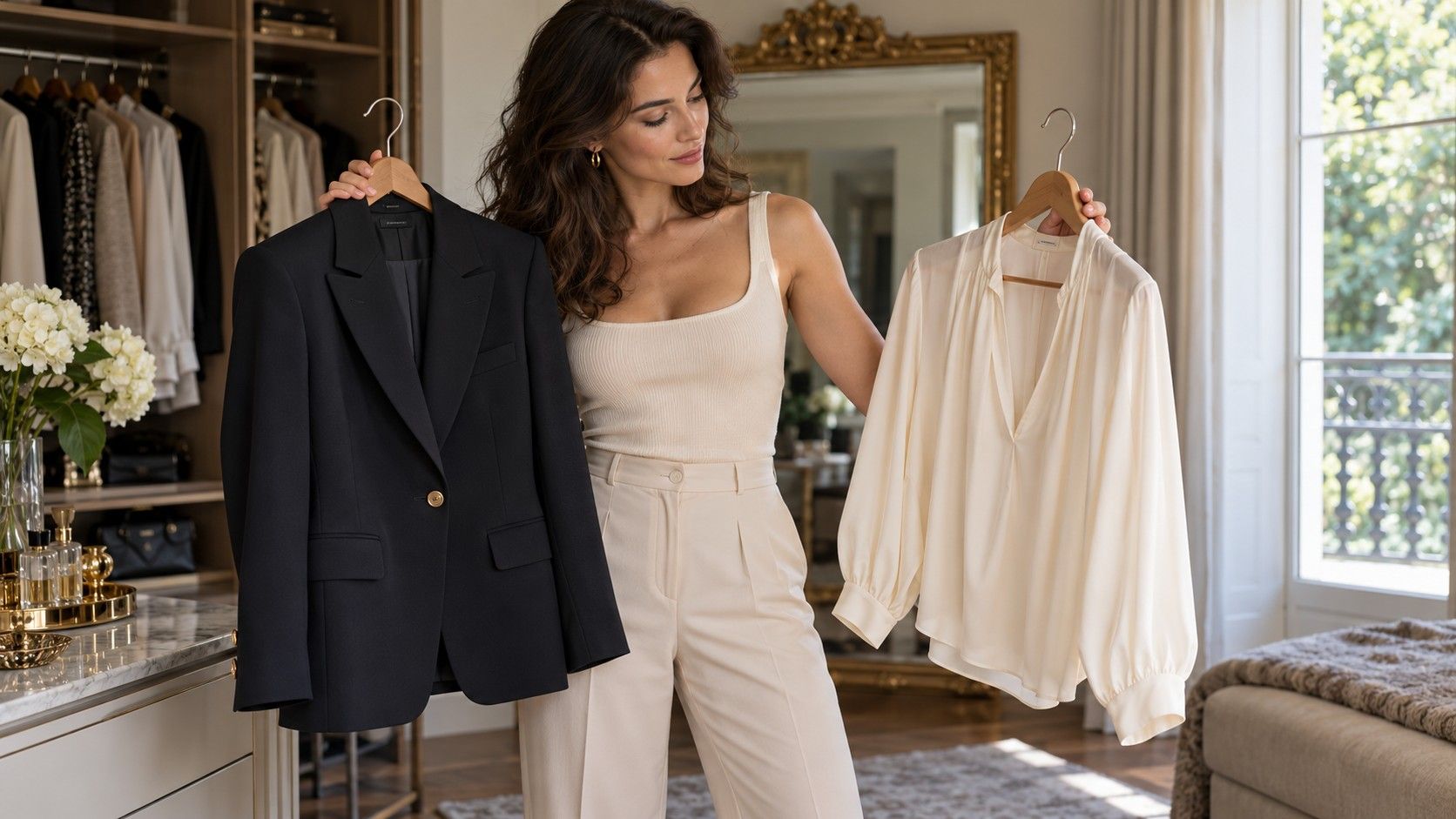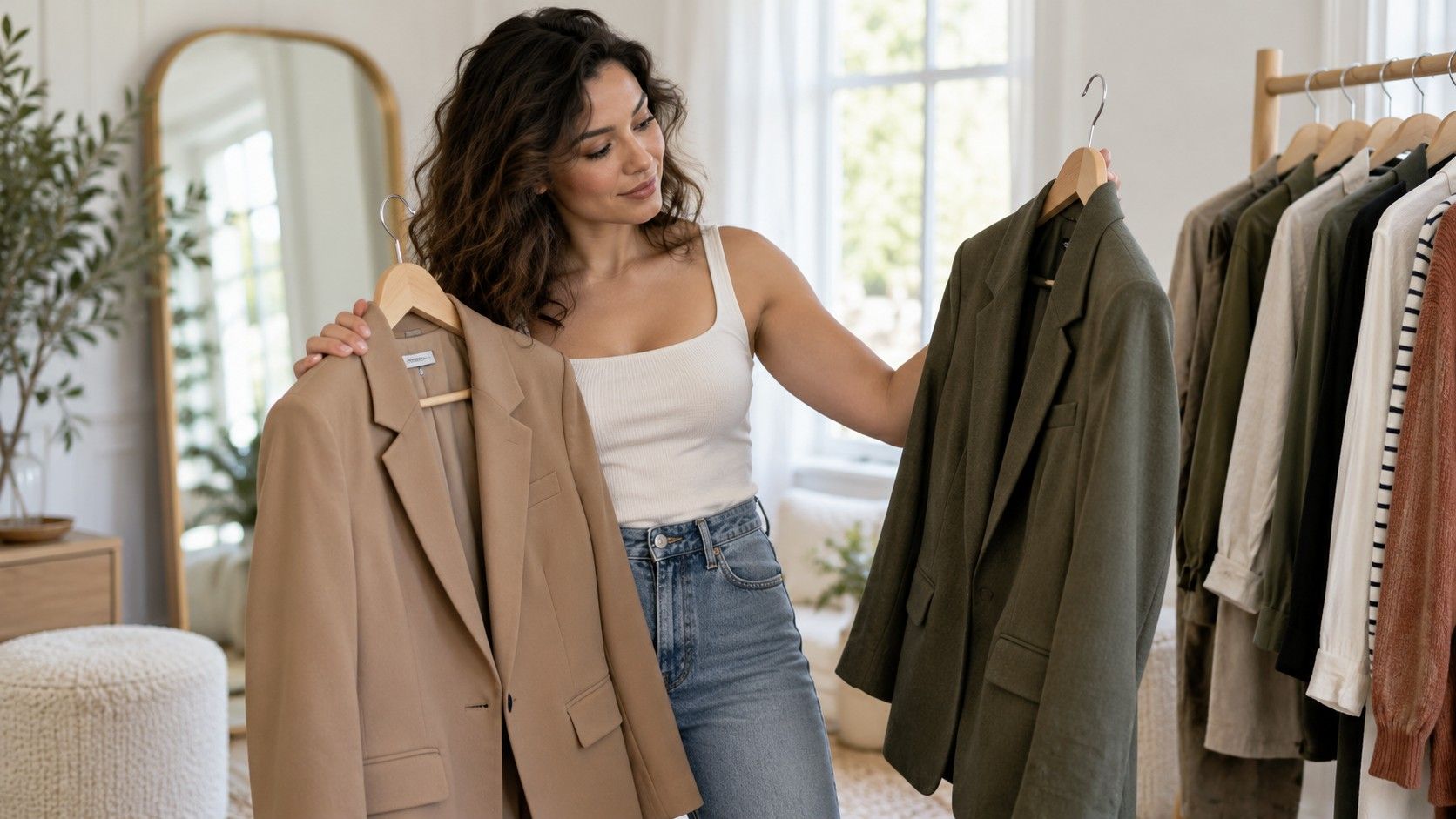
An AI styling tool may suggest a jacket shape or a colour combination you would not have considered. That can be a useful starting point, provided you treat the answer as an outfit idea to test. A photograph does not contain everything needed to judge fit, comfort or personal style. Before uploading an image or buying a recommended garment, separate what the tool can visibly describe from what it is merely inferring.
Know what a photograph leaves out
A still image shows a particular view under particular conditions. It does not show how a waistband feels when you sit, whether you can lift your arms in a jacket or whether a skirt catches when walking. It also leaves out fabric composition, stretch, lining and construction unless those details are supplied separately. A confident-looking recommendation should not be mistaken for a physical fitting.
Camera position changes the view. A phone tilted down or held close can alter the apparent relationship between upper and lower body. A turned hip, an arm held away from the torso or a wide stance changes the visible outline. Loose clothing conceals some contours; a stiff garment creates its own shape. These are reasons to be cautious about precise body labels, especially when an answer is based on one casual photograph.
Colour has its own uncertainties. Warm room lighting, reflected colour from a wall, automatic exposure and white balance can change the appearance of skin and clothing in an image. A tool may describe the colours in the file without establishing how the same fabrics look beside you in daylight. Treat a seasonal palette suggestion as a proposal for comparison, not a diagnosis of an unchanging personal category.
An image also cannot establish your personality, gender identity, health or worth. If a styling answer assigns character traits or presents a body as a problem to fix, disregard that part. You can request ordinary descriptions of line, colour and clothing details without accepting judgments about who you are.
Prepare a consistent photo only if you choose to share one
You can start without a body photograph. Describe a garment, its fabric and the specific problem: “This woven shirt pulls across the back when I reach forward” is more useful than asking for a complete identity. A flat photograph of clothes or a description of outfits you own may be enough for combination ideas. Uploading a personal image should be a choice with a clear purpose.
If you do choose a photo comparison, keep the camera level, use a stable position and stand at a comfortable distance that includes the outfit. Wear clothes you would normally wear, keep your pose relaxed and use the same shoes for each version. Avoid filters and strong directional lighting. The aim is a more consistent outfit comparison, not a promise of accurate body measurement.
Ask a narrow question that the image can help explore. “Compare where these two jacket hems divide the outfit” is more grounded than “Tell me my exact type.” If the answer mentions a feature you cannot see or a measurement you have not supplied, ask what observation supports it. You do not need to provide more sensitive images simply because a tool asks for them.
Separate a styling suggestion from a factual claim
Useful suggestions are reversible and specific: try a shorter jacket with these trousers, compare a softer collar or repeat a colour in the shoes. They give you something to do with clothes. Claims such as “you can never wear a high neckline” or “your measurements prove this image identity” go further than the visible evidence can support. Ask for alternatives and the intended effect.
When an AI fashion recommendation combines body shape, color analysis and images, break the answer into parts. First consider the silhouette. Then consider the proposed palette. Finally look at the actual garment details, such as shoulder construction, waistband and fabric drape. You may like one part and reject another. There is no need to accept the complete package to use a helpful idea.
A generated outfit image can be treated as a sketch of a mood or combination. Before shopping from it, identify real garment features: approximate hem, neckline, sleeve, fabric weight and colour relationship. Check whether the pictured construction is plausible in an actual product. An attractive illustration is not evidence that a garment exists, will fit as shown or can be bought at a stated price.
Check external facts separately. If an answer names a shop, fabric specification, return condition or price, verify it with the seller before acting. If it uses a named style framework, compare the terminology with that framework's own material.
Read the privacy terms before uploading images
Find the service's current privacy policy and image controls before sharing a photograph. Look for clear information about storage, retention, deletion, model training and any sharing with other companies. Check whether settings differ between free and paid accounts. If an important point is unclear, do not assume that private-looking chat or an upload screen means the image is kept only on your device.
Distinguish deleting a conversation, deleting an uploaded image and closing an account. Read what the service says each action does, including any stated retention period. Look for a practical way to request deletion and decide whether you are comfortable with the answer before uploading. This is a service-specific check; no general promise covers every fashion tool.
Share the minimum needed for the task. A clothing-only picture may answer a styling question. If a personal image is useful, remove background details you do not want to share and use selected-photo access where your device and app offer it. Cropping a face or removing location metadata can reduce some disclosed information, but it does not make the rest of an identifiable image anonymous.
Use your own images and obtain permission before uploading someone else's. Keep children and unrelated people out of the background. If a tool presses for more revealing photographs than you are comfortable sharing, stop the upload and use descriptions or garment photos instead. A style experiment should not require you to give up control of images you would rather keep private.
Test the recommendation with real clothes
Choose one suggestion and use items you already own. If the tool recommends a longer vertical line, compare a top and trousers in similar depth with a more contrasted combination. Keep the shoes and pose steady. Decide which version you prefer for the particular occasion, then walk, sit and reach. The attractive arrangement is only useful if you can live in it.
If it suggests a different jacket shape, identify what actually changes. Is it the hem length, lapel width, closure position or fabric stiffness? Try one change at a time when possible. A jacket that feels better because its sleeves have more room does not prove that an image-based type was correct. Record the useful garment feature so you can find it again.
For a palette idea, compare two real colours near your face under similar light. Do not buy a large set of replacement clothes to obey a new season label. A scarf, borrowed top or existing knit can provide a low-commitment test. You may enjoy several colour families, and your preferences may depend on texture, contrast and the rest of the outfit.
Before purchasing, check the product's actual dimensions, fabric, care instructions and return conditions. Read the seller's description rather than assuming the generated picture represents the real item. Work out two outfits with clothes you own. If the recommendation requires several supporting purchases or alterations, count that cost before deciding whether it solves your original problem.
Keep a record of useful results rather than a fixed verdict
Save a few outfit photographs privately, with notes about comfort and use. Record “shorter jacket works with these wide trousers” or “softer collar sits comfortably under this coat.” Include the garment size, fabric and any adjustment that mattered. This builds a personal reference grounded in wearing clothes, rather than a sequence of classifications from different tools.
If two tools give different body labels, you do not have to choose a winner. Return to the question you wanted answered. A comfortable trouser rise, a preferred neckline or an enjoyable colour combination remains useful even when the labels disagree. You can also stop using a tool that makes getting dressed more anxious or complicated.
AI body type analysis earns its place when it offers a manageable experiment and you retain the decision. Keep the suggestions that survive a mirror check, movement and ordinary wear. Leave the rest behind without treating a software output as a verdict about your body.