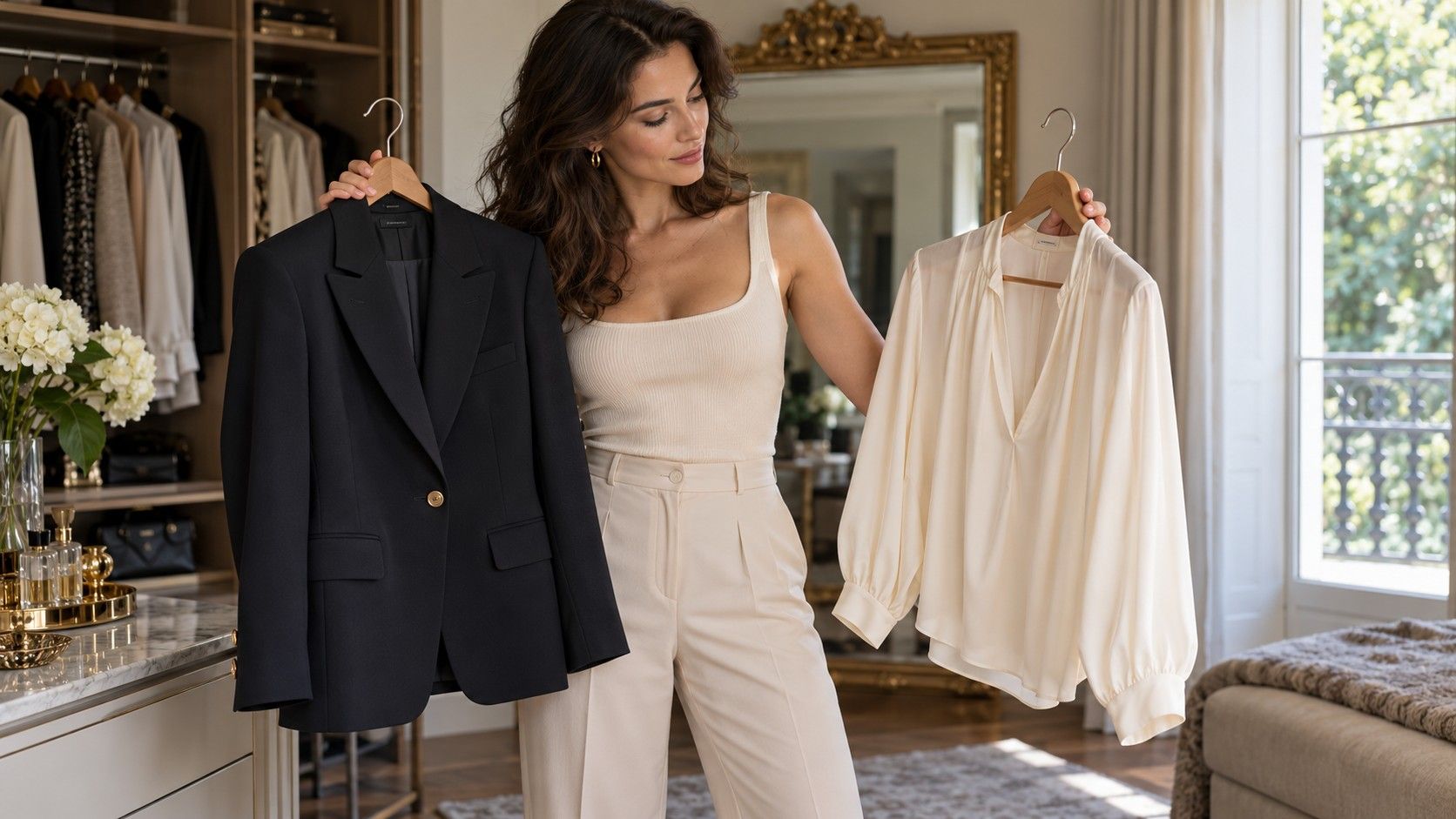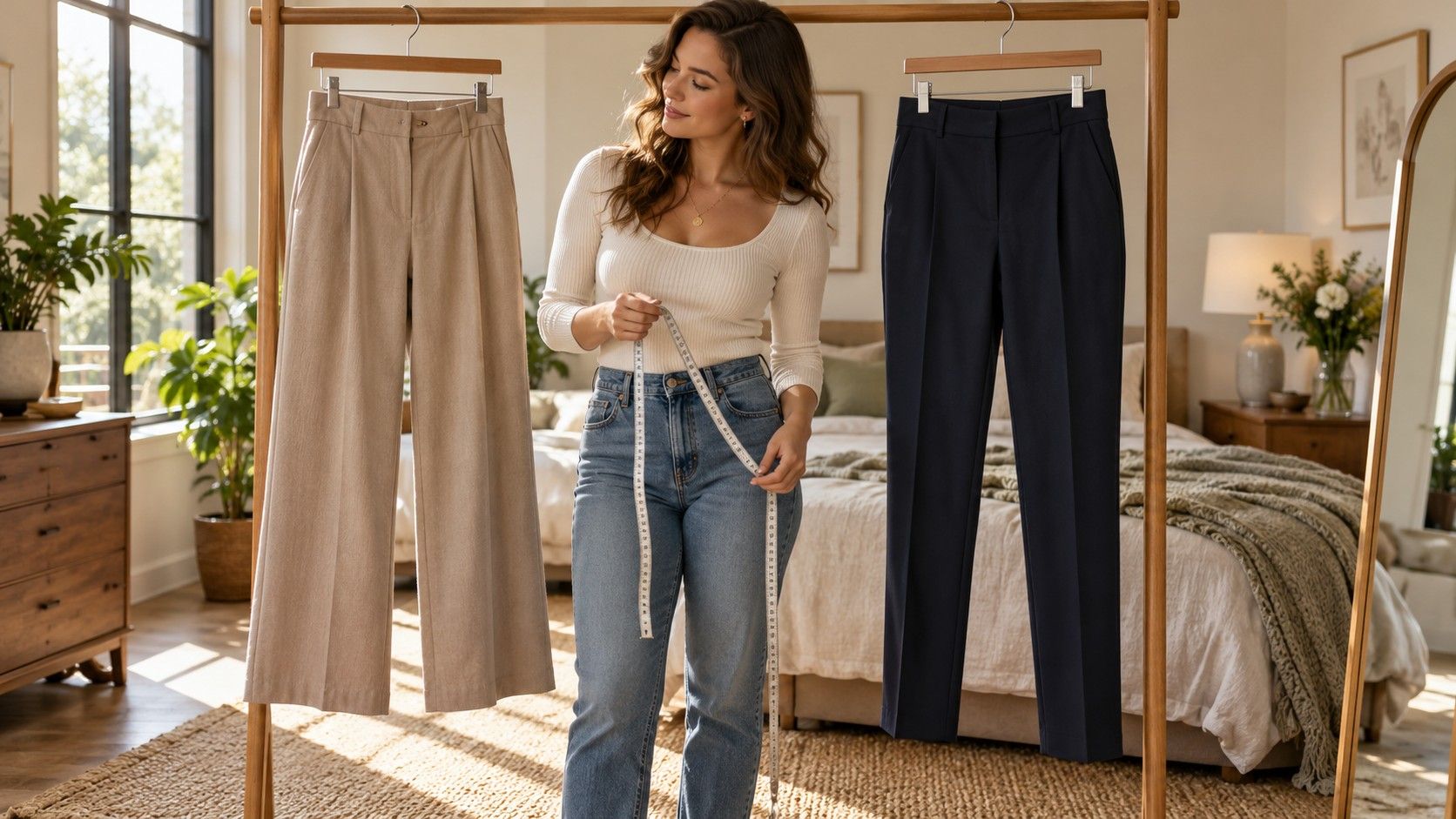
You enter three measurements and receive a shape name in a fraction of a second. It feels definite, especially if the result arrives with a neat diagram. Yet body shape calculator accuracy is a limited question: accurate at applying its own formula is different from useful for choosing a dress or trousers. Treat the result as a rough description of the numbers you entered, then check whether it helps with clothes you actually wear.
Understand the inputs behind a result
Start by looking at what the calculator asks you to supply. Bust, waist and hip circumferences are common inputs. Some tools ask for shoulders, height or other measurements, while others use photographs. Those are different methods with different assumptions. A calculator cannot directly account for information it never receives, and adding more inputs does not by itself prove that its clothing recommendations are better.
A measurement-based tool normally compares relationships among the numbers and assigns a category according to its own rules. For example, it may use the contrast between waist and hip measurements or the difference between bust and hips. Unless the method is disclosed, you cannot know where its boundaries lie. Two calculators can label the same measurements differently without either having made an arithmetic error: they may be applying different definitions.
Check the units before interpreting a surprising answer. An inch entered into a centimetre field changes the input dramatically. Also check whether the tool asks for a circumference or a width. A full tape measurement around the bust cannot be substituted for the distance across the front or across a garment laid flat. The number may fit the input box while describing a completely different thing.
Read the result as conditional: “With these measurements and this formula, the category is X.” That is narrower than “Your clothes should always be X.” A tool that presents the category without explaining the method has given you less information, not more certainty. You can still use it as a starting point, but keep the measurements and any useful observations rather than treating the label as the whole result.
Repeat measurements before trusting a label
Use a flexible tape over thin clothing or the underwear relevant to the garments you are considering. Stand in your normal posture and breathe comfortably. Keep the tape level and let it touch without tightening. Measure bust, waist and hips according to the tool's diagram, since a natural-waist reading and a low-waist reading are not interchangeable. If the instructions are unclear, the result carries that uncertainty forward.
Take each measurement twice, moving the tape away between readings. A changed tape position can alter the result, particularly around the fullest part of the seat. If the numbers differ, inspect the placement rather than picking whichever creates your preferred label. Record the units and measuring points. This helps you determine whether a later difference comes from the method rather than assuming your proportions have meaningfully changed.
Categories can have hard boundaries even though bodies vary continuously. If a small change in an input switches the result from one label to another, that tells you the measurements are near that tool's boundary. It does not mean your wardrobe suddenly needs a different set of rules. Keep both labels as tentative descriptions or set them aside and work from the fit problem that prompted the search.
Account for shoulders height and garment construction
Bust circumference does not reveal shoulder width. Two people with similar bust, waist and hip readings can have different shoulder lines, torso lengths and distributions of volume around the back and front. Clothing wraps around all of those details. A simple calculator reduces them to a handful of numbers, which explains why its recommended silhouette can work for one person and feel unconvincing for another.
Height alone would not solve the problem either. A shorter bodice with longer legs and a longer bodice with shorter legs can occur at the same total height. A fixed waist seam may sit too low even when every circumference fits. If a dress repeatedly misses your waist position, comparing bodice lengths or trying another length range is a more direct experiment than changing your calculator answer.
Garment construction brings another set of variables. A fitted woven blouse needs room and shaping that a loose jersey top may handle differently. A lining can limit stretch, a high armhole can affect movement, and a dropped shoulder is intended to sit beyond the anatomical shoulder. No broad shape category tells you whether one particular sleeve lets you reach forward comfortably.
Fabric drape also changes the outline. A crisp skirt can stand away from the hips, while a fluid one falls closer. Even when two garments share the same size and general silhouette, their weight, stiffness and seams can change the impression. Use a calculator to suggest a comparison if you wish, then inspect the actual cloth and movement. It cannot replace those observations with a universal list of flattering garments.
Use a result to choose comparison outfits
Turn the label into a small question rather than a shopping restriction. If the result suggests emphasizing the waist, compare a straight dress with a similar dress that has an adjustable tie or waist seam. Use comparable fabric and length, and keep the shoes the same. Ask whether you enjoy the difference and whether the seam sits comfortably. You are testing a styling preference, not trying to confirm that the calculator is right.
If it suggests adding visual volume through one part of the outfit, compare that idea with a quieter version. A fuller sleeve and a plain sleeve on similar tops can be informative. So can a straight trouser leg and a wider one with the same rise. There is no requirement to balance your shoulders and hips or make any part appear smaller. The useful outcome is discovering which lines you prefer in your everyday clothes.
Keep fit and visual preference separate in your notes. “I like this skirt's movement, but the waistband is tight” describes two different issues. Try the size or cut that gives enough room before rejecting the silhouette. Conversely, a technically comfortable dress may simply not feel like your style. A calculator cannot settle whether you enjoy a fabric, a detail or an overall mood.
Try one familiar outfit and one experimental outfit before buying a new wardrobe. Take photos only if you find them helpful, using similar lighting, distance and stance. More importantly, sit, walk and reach in the clothes. Your notes might say “straight jacket comfortable at a desk” or “waist tie needs constant adjustment”. These observations remain useful even if a different calculator gives you another shape tomorrow.
Know when to ignore the calculator
Set the result aside when its advice contradicts clothes that repeatedly work for you. If a guide says your category should avoid a cut you wear comfortably and enjoy, you do not owe the guide a replacement wardrobe. The category is meant to simplify an experiment, and it has failed that purpose if it makes you distrust practical experience without offering a testable explanation.
Be cautious about precision claims. A percentage, confidence score or detailed diagram can look authoritative, but it does not explain how the system was evaluated. Without clear evidence and a defined task, you cannot read such a number as a probability that the label or outfit advice is correct. A clothing suggestion should earn its place through useful comparisons rather than the appearance of numerical certainty.
Do not treat a general shape calculator as a way to establish a Kibbe image identity, a style essence or a colour season. These frameworks ask different questions; bust, waist and hip ratios do not establish all of them. Nor is a clothing-shape result a health assessment. Keep the tool within its narrow styling purpose and leave unrelated conclusions out of your wardrobe notes.
Check what an upload-based service asks you to share before using it. You can explore clothing proportions with a tape, a mirror and local notes without uploading a photograph. If a tool requires more information than you want to provide, choose a simpler method. Declining an upload does not prevent you from testing waist placement, trouser rise or fabric drape in your own wardrobe.
Stop when you have a useful next action. That might be trying a contoured waistband, comparing two jacket lengths or taking the measurements needed for a retailer's chart. You can keep the category if it makes those searches easier and discard it if it adds confusion. A successful tool leaves you with clearer clothing choices; it does not require loyalty to the shape name on its result screen.