A small wardrobe succeeds when it makes ordinary mornings easier. A capsule wardrobe built around body shape alone can miss the things that decide whether clothes get worn: a comfortable waistband, suitable shoes, laundry time and the temperature on the way to work. Begin with your most useful outfits, identify why they work and build a small set of combinations around your actual week.
Audit outfits you wear rather than everything you own
For a normal week, note what you put on and which pieces you remove before leaving home. An item you keep rejecting deserves a closer look. Perhaps the blouse needs ironing, the trousers feel tight when seated or the cardigan never works over your usual sleeves. Those are different problems. A wardrobe count will not reveal them unless you record what happens while getting dressed.
Include activities that require different clothes. Three office days, a long walk, working from home and a dinner out may need overlapping pieces but different shoes or outer layers. Account for uniforms, religious preferences, sensory needs and climate where relevant. A capsule should fit your routine; you do not need to create a minimalist version of someone else's lifestyle.
Lay out three or four successful outfits. Check whether a few items repeat and whether the less successful ones share a difficulty. If your favourite trousers have a shaped waistband and enough room through the seat, record those features. If a favourite top works because it is easy to wash and sits neatly under a jacket, record that too. These details are a stronger starting point than a list of essentials chosen for a broad shape label.
Find repeatable garment shapes in your favourites
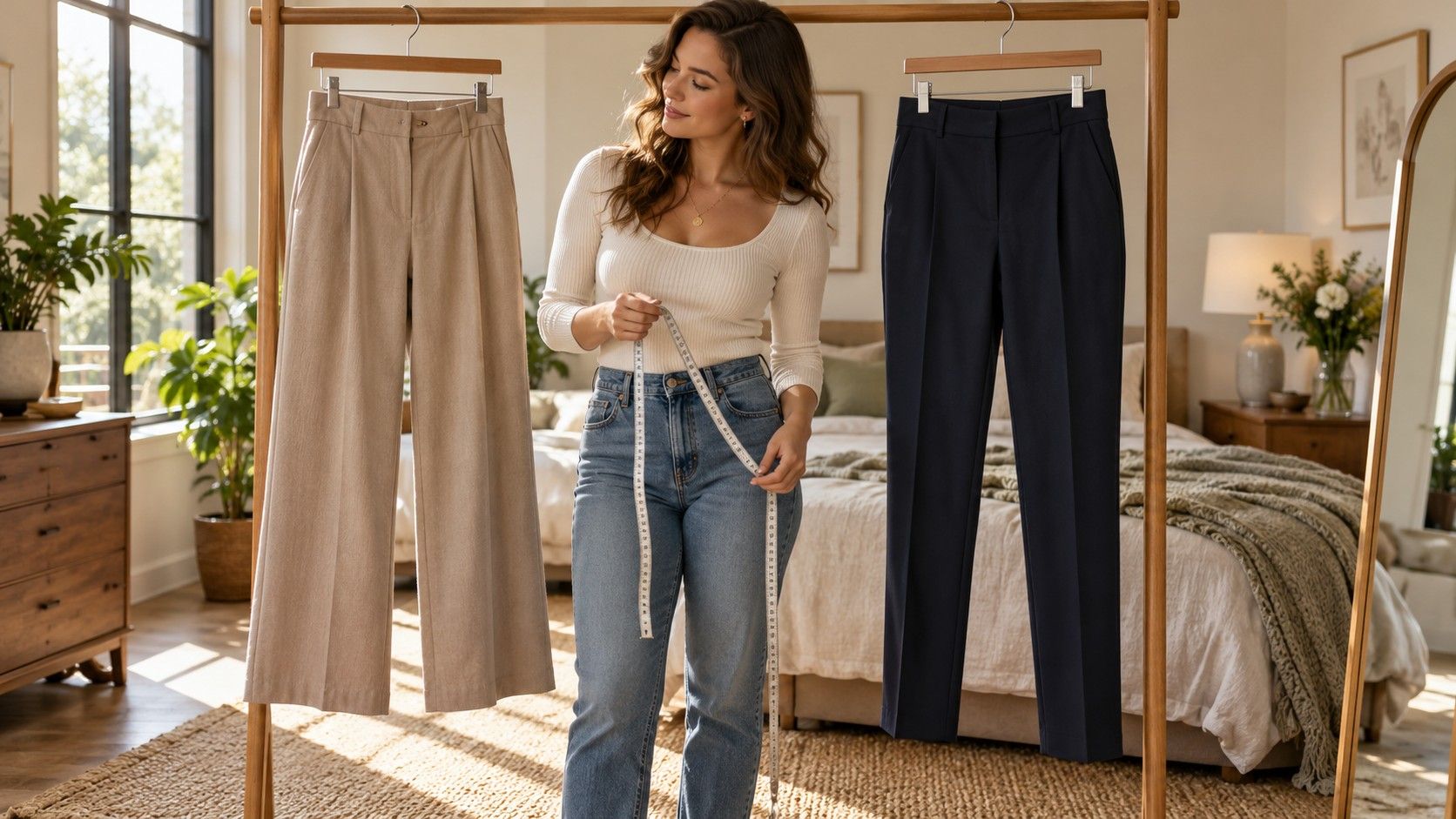
Compare the fit of two bottoms you like. Look at rise, waistband position, room through the hips and thighs, leg shape and hem length. Sit, walk and bend in them. The measurements on a size label will not tell you how the garment behaves, and a body-shape category cannot account for all those construction details. Use the actual trousers as a reference when trying another pair.
Do the same with tops. Notice where the shoulder sits, how much space is available through the upper arm and whether the hem works with your usual bottoms. A top that looks good loose may become bulky when tucked. A cropped knit may pair easily with higher-rise trousers but feel too short with a lower rise. Save the successful pairings rather than declaring one top length correct for every outfit.
Fabric drape changes the shape. A wide trouser in heavy denim has a different presence from one in a fluid woven fabric. A crisp shirt and a soft jersey top need not create the same amount of volume even in a similar size. If a replacement feels unlike a favourite, compare fabric weight and stiffness before blaming the cut or your proportions.
Choose a few comfortable shapes to repeat, with room for variety. You might use straight trousers with a soft top, fuller trousers with a neater knit and an easy dress. There is no need for all three to follow the same silhouette. Repeating practical features such as pockets, suitable sleeve room and washable fabrics can matter more than keeping every outline identical.
Choose colours that connect the pieces you already wear
Start with existing clothes rather than a theoretical palette. Pick one or two base colours that appear in your reliable bottoms and outer layers. Navy and charcoal, brown and cream, or black and denim blue can all form workable starting points if you enjoy them. Then choose several top colours that you already like with those bases. The exact number is less important than whether the combinations appeal to you.
Check the shades together in daylight. Two items described as navy can differ enough to look like an accidental mismatch, though you may enjoy the difference. Texture can make a close pairing feel deliberate: a smooth trouser with a textured knit is a different relationship from two nearly matching smooth suiting fabrics. Try the actual pieces instead of relying on colour names in a shopping list.
Seasonal colour analysis can supply ideas for related shades and contrast, but it does not need to govern the whole wardrobe. A favourite bright scarf or patterned skirt can earn its place through frequent wear. If you dislike the look of one colour near your face but enjoy it in trousers, keep that distinction.
Include shoes, bags and coats in colour checks. They occupy a substantial part of the finished outfit and may have stricter practical requirements. A comfortable weatherproof shoe is worth building around. You can repeat its colour elsewhere if you like, or simply let it serve its purpose without requiring an exact match.
Build combinations before adding another piece
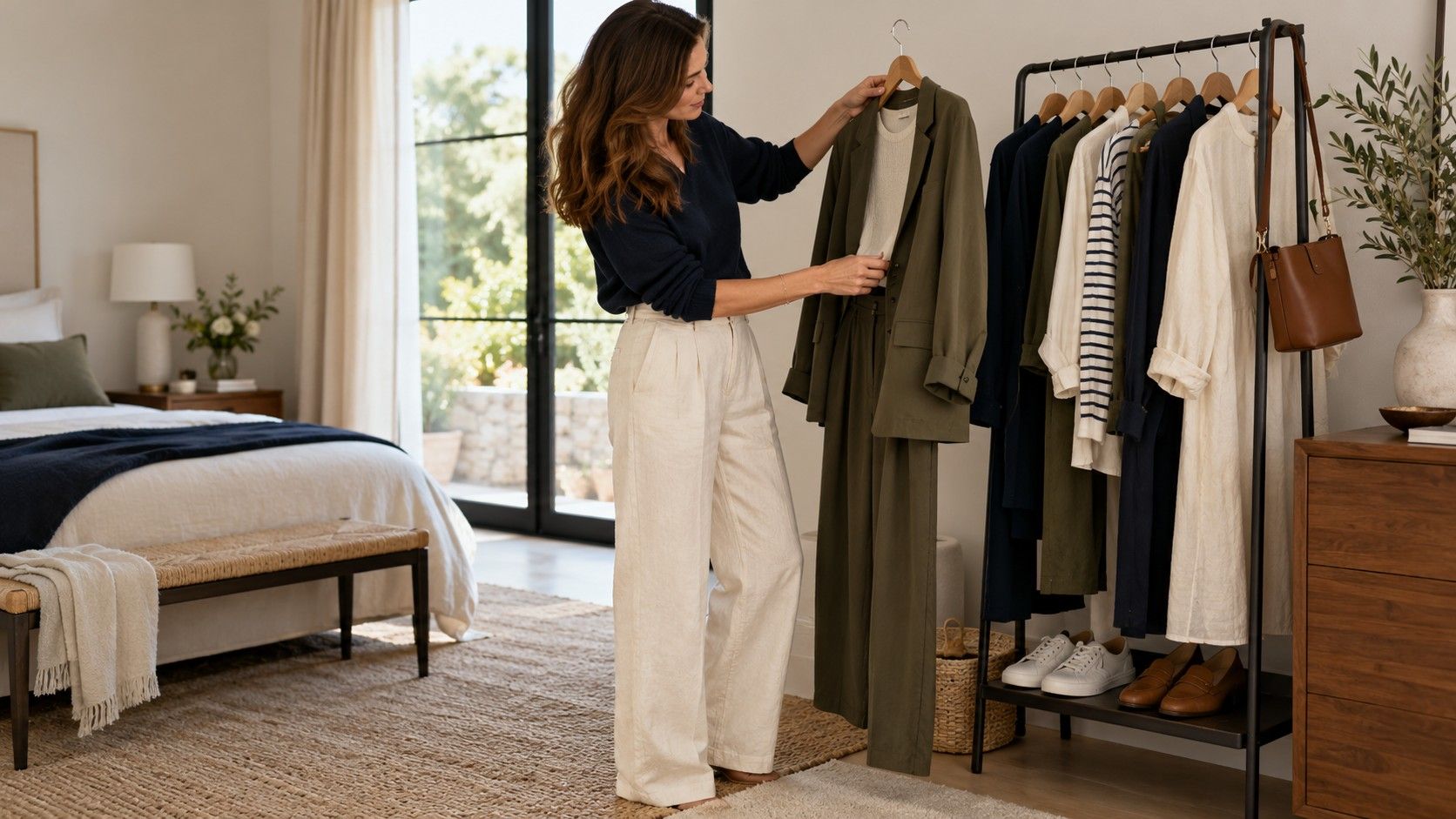
Take each bottom and try it with at least two tops. Put on the shoes and outer layer, then sit and move as you would during the day. A combination is not established just because its colours work on the bed. Check that the jacket fits over the top, the trouser hem clears the ground and the shirt does not bunch uncomfortably at the waistband.
A small combination grid can reveal useful gaps. Treat this example as a method, not a required shopping list.
| Base item | Everyday combination | Alternative use | Check before counting it |
|---|---|---|---|
| Comfortable straight trousers | Washable knit and walking shoes | Woven top and smarter shoes | Hem works with both shoes |
| Relaxed skirt | Plain top and flat shoes | Soft blouse and jacket | Waist stays comfortable seated |
| Easy dress | Light outer layer | Warmer knit over the dress | Layers do not catch or bunch |
If a piece only works in one combination, that does not automatically make it a mistake. An occasion outfit, specialist coat or work uniform may have a narrow but essential job. Distinguish a necessary specialist from a garment you are keeping because it might become useful after several other purchases.
For a genuine gap, write a short description before shopping. “Washable woven top with enough upper-arm room, works loose with charcoal trousers” is specific. “A top for my body shape” leaves the important requirements unresolved. Bring the relevant trousers when possible, or check a new item with them at home while return conditions still apply.
Test the capsule through laundry, weather and movement
Wear the planned combinations during an ordinary week. Notice when a clean item is unavailable, when you need a warmer layer and when shoes limit walking. If two tops are both drying on the day you need them, the capsule needs a different laundry rhythm or another suitable top. There is no benefit in keeping the item count low if it makes the week harder.
Fabric care can create a hidden workload. A top that needs hand washing or careful pressing may still be worthwhile, but it should earn that effort. Read the care label before adding a new piece and compare it with how you actually wash clothes. A theoretically versatile garment that is always waiting for special treatment is less available than its outfit count suggests.
Check changes across the day. A waistband may feel different after sitting for several hours; a knit may stretch at the elbows; a skirt lining may ride up during a walk. These observations help distinguish a poor fit from a temporary styling annoyance. If an alteration seems possible, ask a tailor about the specific construction and likely result before relying on it.
Allow enough flexibility for comfort and body changes. Keep clothes that fit your present needs rather than requiring your body to qualify for a fixed wardrobe. A small range of adjustable waistbands, different layers or alternative fits may be more practical than exact duplicates. Reassess the capsule when your schedule, climate or preferences change.
Buy for a named job and review the result
After the trial, divide the notes into repairs, combination problems and missing functions. A loose button needs repair. A good skirt with no suitable top needs a pairing decision. A week of wet commutes without a usable coat reveals a functional gap. This makes the next purchase more focused and prevents a vague sense of wardrobe dissatisfaction from becoming a long shopping list.
Give a proposed purchase two existing outfits and one clear job. Consider the full cost, including alterations, special care and any supporting items it needs. If the garment passes those checks and feels good in motion, it may deserve a place even if a body-shape guide would not select it. Keep a photo of the successful combinations so the useful discovery does not disappear after the shopping trip.
Review after several weeks of real wear. Keep the observations that have proved useful, replace pieces only when a need is clear and leave room for clothes you enjoy without a versatility argument. The wardrobe has done its job when it provides enough comfortable choices for your days and lets you get on with them.