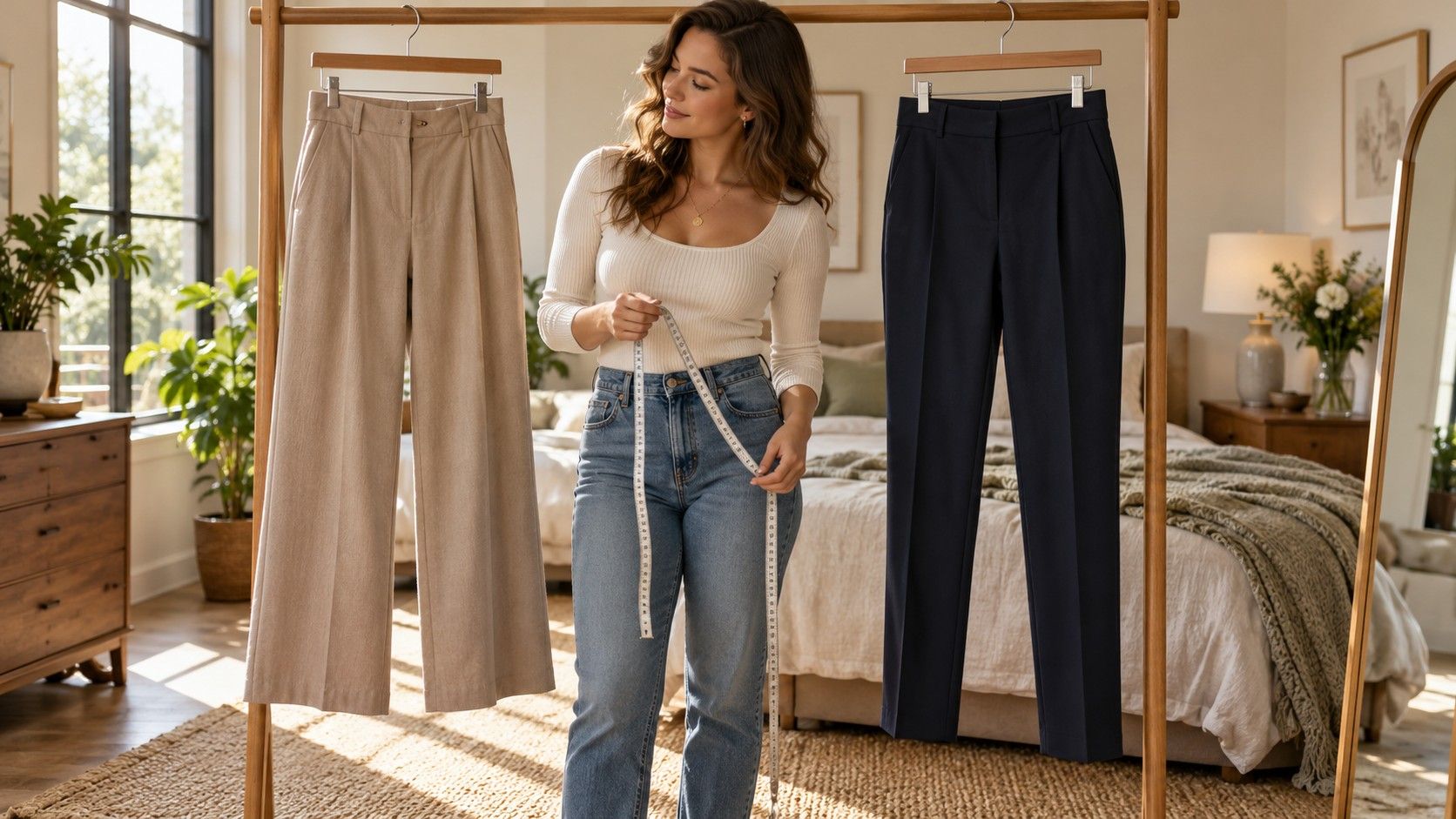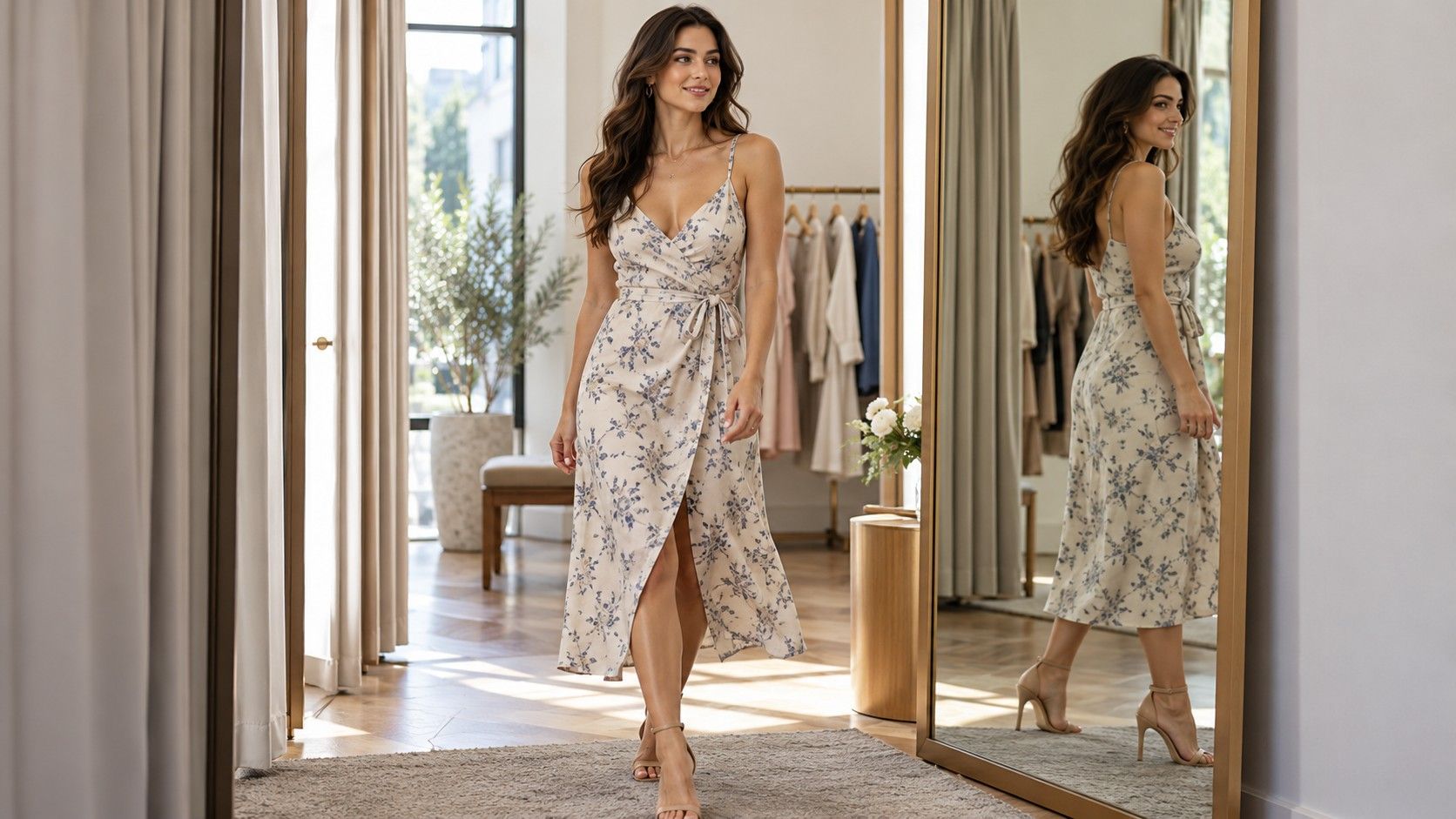
The dress that looks promising on a hanger still has to work when you sit down, carry a bag and spend several hours away from the fitting-room mirror. When deciding how to dress for your body shape, start with those ordinary demands. Proportions can suggest a few cuts to compare, but the position of a seam, the weight of the fabric and the room through the shoulders usually explain more than a shape label alone.
Start with the occasion and how you move
Choose the day before choosing the silhouette. A dress for an outdoor wedding on grass has different demands from one for a desk, a train journey or an evening spent mostly standing. Think about the shoes, underwear and outer layer you will actually wear. A hem that feels manageable in sandals may catch under a heel; a fitted sleeve that is comfortable alone may pull under a tailored coat.
Write down the two or three requirements that would make the dress useful. You might want a skirt that allows a long stride, a neckline that stays put while bending, or pockets that can hold a key without distorting the side seams. These are concrete tests. “Flattering for my shape” is less helpful unless you can describe the visual effect you prefer, such as a clear waist or a long, uninterrupted line.
Then separate the visual choice from the fit requirement. A fitted sheath, a loose shift and a full-skirted dress can all be valid options for the same person. If you enjoy a straight silhouette, you do not need a waist tie simply because a guide recommends definition. If you like volume, the task is to find volume that hangs and moves as you want it to, with enough room at the areas where the dress touches.
Take a familiar pair of shoes and, when practical, the intended bra to the fitting room. Keep an alternative dress nearby with a different construction but a similar length. Comparing a soft wrap style with a stiff strapless mini changes so many features that the result is hard to interpret. Two reasonably similar dresses make it easier to identify what is helping.
Check the dress through the bust and shoulders
Begin where the dress hangs from the upper body. For a conventional set-in sleeve, look at where the shoulder seam sits and whether the neckline lies as intended. A deliberately dropped shoulder will sit differently, so assess it according to its design. Lift your arms forward as though picking something up from a desk. The dress should give you the movement its purpose requires without a constant need to pull it back into place.
Check a fitted bust from the front and side. Pulling at buttons, a raised front hem or fabric stretched tightly across the bust may mean the cut needs more room or shaping. Moving up a size is worth testing, but it can leave the shoulders and neckline too large. Another bodice shape, a fuller-bust option where available, or stretch fabric may be a better starting point than trying to solve every issue with one larger size.
Look at armholes as well as sleeves. A sleeveless dress can have plenty of bust room yet gape at the armhole; a fitted sleeve can restrict reach even when its circumference seems adequate. These are pattern and construction questions, not evidence that your body is difficult. Try a different armhole, sleeve design or fabric before deciding the whole dress category is unsuitable.
Adjustable straps can help set a neckline and bodice at a comfortable height, but shortening them also raises the armholes and waist position. Make one adjustment, then check the entire upper half again. If the bodice fits only while you stand with your shoulders in an unnatural position, it is not a dependable starting point for an event lasting several hours.
Compare waist placement and skirt volume
Find the dress's intended waist before deciding whether you like it. Some styles use a seam at the natural waist; others sit high, low or have no defined waist at all. If a seam feels wrong, note whether it is too high or too low rather than treating the problem as a mismatch with your body shape. A shorter or longer bodice can make two dresses in the same labelled size feel quite different.
Try a belt loosely over a simple dress to explore placement. Move it a little higher, then lower, checking the side view and sitting each time. This is a visual experiment, not a promise that adding a belt fixes a poorly fitting bodice. A fixed seam remains where it was sewn, and gathering excess fabric can create more bulk than you enjoy. Use the result to search for a cut with the right placement built in.
Compare skirt volume with the same top-half fit. An A-line skirt may skim the hips; a gathered skirt adds folds around the seam; a bias-cut skirt can follow curves and move closer to the body. None belongs exclusively to one shape. Ask where you want movement, whether the fabric catches on underwear, and whether the skirt gives you enough room to sit without climbing up excessively.
Consider pockets and pleats in use. Put your hands into the pockets, then remove them and watch whether the opening settles. A pocket that pulls open when empty may indicate tension through that area or a construction you dislike. Pleats can open by design, so inspect the intended effect rather than assuming every open fold is a fit fault. The useful question is whether the skirt behaves the way you want through an ordinary day.
Look at fabric before blaming your shape
Two dresses with near-identical outlines can behave differently because of cloth. A crisp cotton can hold a skirt away from the body, while a soft viscose may fall closer and reveal more movement. Heavier fabric may pull a loose shape downwards; a light fabric can catch or billow. Hold the cloth and watch how it falls when released, then judge the actual garment on you rather than predicting drape from the fibre name alone.
Stretch changes the fitting question but does not guarantee comfort. A very stretchy dress can still pull at the neckline or feel restrictive at a firm waistband. Check recovery by noticing whether the garment returns to its shape after movement, within what is reasonable while trying it on. Do not buy an uncomfortable dress on the assumption that every fabric will relax enough later. Care, knit structure and construction all affect what happens with wear.
Look inside for lining, seam allowances and closures. A woven lining can limit movement even when the outer fabric stretches. A zip that waves might reflect tension, fabric or construction rather than a simple size problem. Wear the dress for a few minutes, sit and stand, then inspect how the lining and outer layer settle together. You should not need to smooth both repeatedly just to restore the intended silhouette.
Colour and print can influence which dress you prefer, but they cannot explain away physical discomfort. If you love the fabric and dislike the cut, keep a photo of the detail you want to find again, subject to store rules. It may be the matte surface, a small print or a particular softness that appeals. Searching for those features in another pattern is often more productive than buying a fit problem because the colour is perfect.
Sit walk and reach before deciding
Use a chair if one is available. Sit as you normally would, check the waist and skirt, then stand without immediately rearranging everything. Walk a few paces and take a step up if the space allows. A slit should provide the movement you need without opening more than you want; a wrap should stay secure through the actions you expect on the day. Test with the actual fastening rather than holding the front in place.
Reach forward and lift your arms to a practical height. Every fitted garment moves somewhat, and an evening dress has different demands from workwear. The point is to decide whether that movement suits your purpose. If raising a glass shifts the neckline or the bodice continually rides upward while you walk, record the behaviour instead of assuming you will remember to manage it all evening.
Inspect from the side and back as well as the front. Check whether the hem is intentionally shaped, whether seams hang without twisting and whether a back fastening remains comfortable. Take a photo if permitted and useful, keeping the camera position ordinary rather than using a dramatic angle. A still image can help compare proportions, but it cannot tell you how the waistband feels after sitting.
Before paying, identify any alteration precisely. A simple hem may be feasible, but moving a waist seam, changing a lined bodice or altering a complex neckline can require substantial work. Ask a tailor before relying on it. Keep the dress that meets your movement needs and gives you the silhouette you enjoy, even if its style contradicts a body-shape chart. The chart does not have to spend the afternoon wearing it.