Long jackets, easy trousers and muted colours can make an appealing outfit, yet the same pieces can feel shapeless when combined without considering fit. Exploring Flamboyant Natural and Soft Summer together gives you a way to test roomy lines and quieter colour separately. Use the labels as inspiration for real clothes and ordinary plans, with room for your own taste.
Keep colour season separate from image identity
Flamboyant Natural is an image identity within the Kibbe framework. Soft Summer is a seasonal-colour label used by some colour-analysis systems. They are separate ideas, and combining their names does not create a scientific or official hybrid category. Neither a shoulder width nor a height measurement determines a colour palette. Muted colours do not establish anything about body shape.
In casual styling discussions, Flamboyant Natural inspiration often involves open shapes, room to move and a sense of length through an outfit. Treat that as a direction to explore, rather than a command to buy everything oversized. Fit still matters at the neckline, shoulder, armhole and waistband. Clothes that slip, twist or restrict movement need a practical solution before a label can be useful.
Soft Summer palettes are often described as muted and relatively cool, although the exact colours vary by system. A dusty blue or softened grey may be worth trying if you enjoy them, but their names do not guarantee a match. The actual fabric, lighting and surrounding clothes change the impression. You can like these colours without claiming a season.
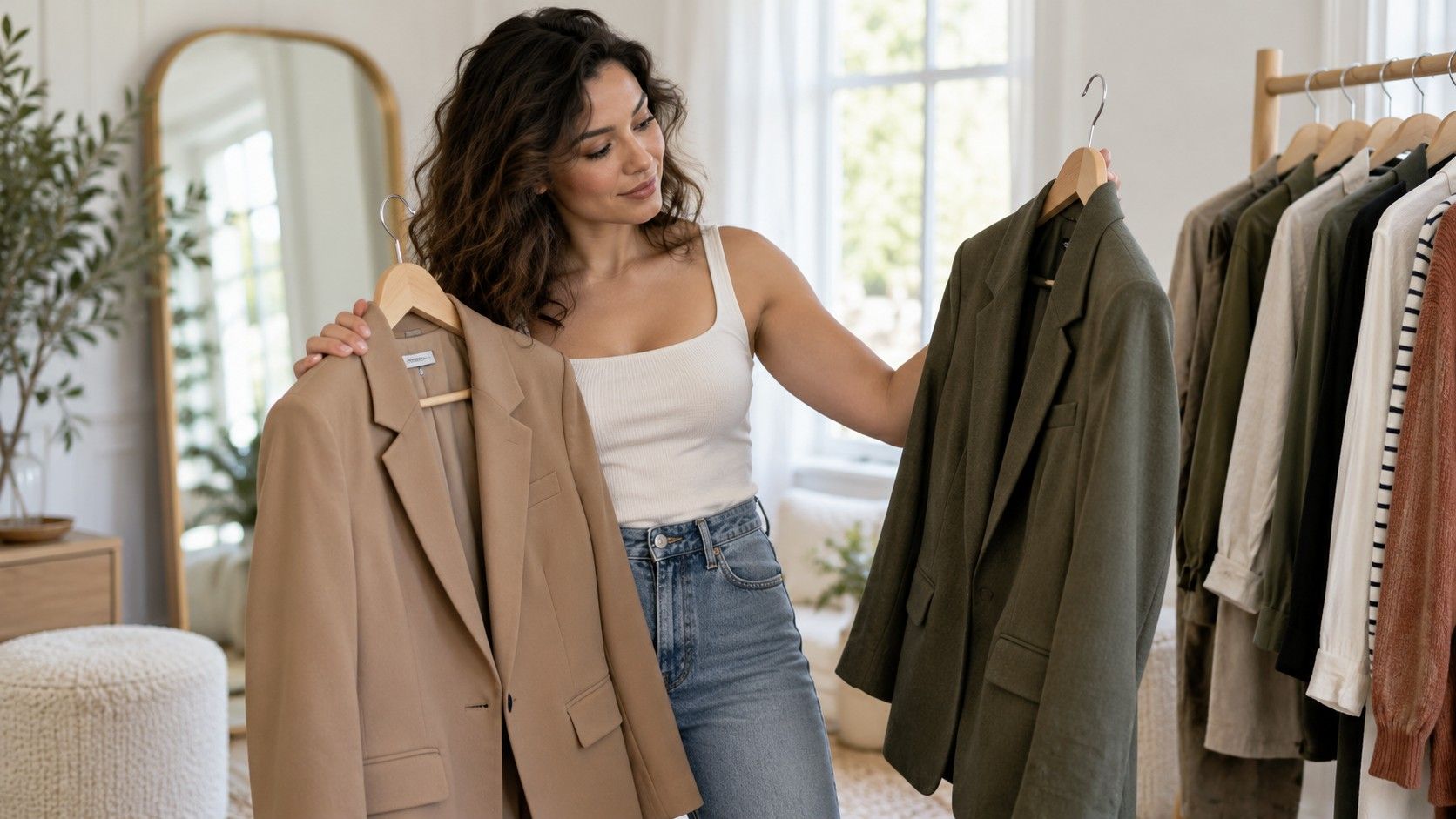
Begin with a successful outfit and identify one question. Would a longer layer look better with those trousers? Would a quieter top colour be easier to repeat? Change that detail and keep the rest stable. If an entire new outfit fails, you otherwise have little evidence about whether the colour, fabric, length or fit caused the problem.
Try an open silhouette with a colour you already wear
An unbuttoned shirt over a simple top is an accessible first experiment. Wear it with trousers that allow you to walk and sit easily, then compare the shirt open and fastened. Open edges can create a different visual rhythm, but the garment should stay comfortable without being held in place. Check whether the collar shifts when your everyday bag sits on your shoulder.
Try a slightly longer shirt beside a shorter one with the same trousers. A long version might feel fluid or simply get in your way; a shorter one may give enough shape without a tuck. Neither outcome says whether you have correctly identified yourself. It tells you which garment works with that particular lower half and your preferred level of ease.
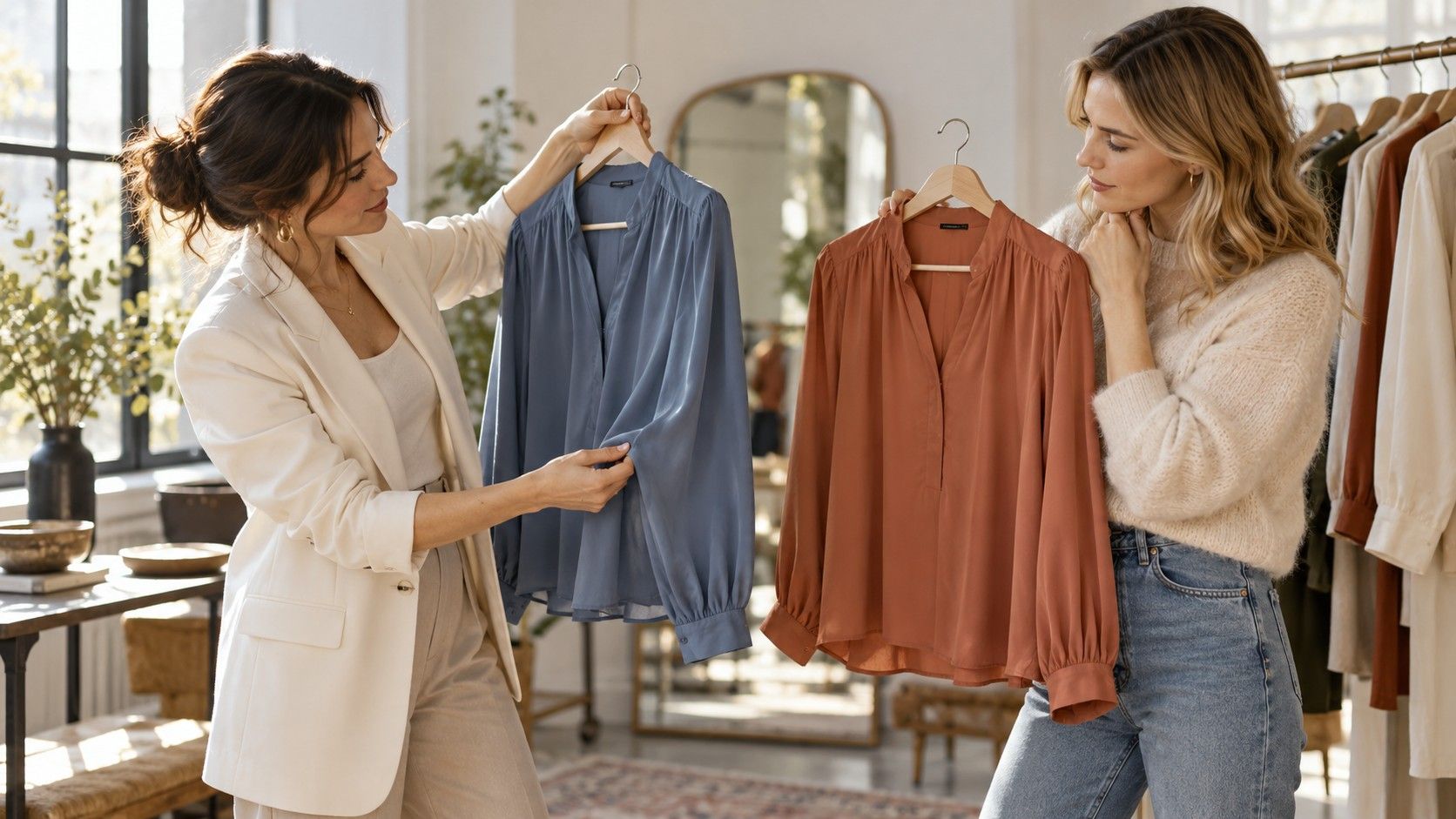
Keep the colour test small. Pair dark grey trousers with a muted blue top you own, or try a grey-green shirt over a familiar neutral. These are possible combinations, not a palette prescription. If a colour feels lifeless beside your face, compare another shade in the same garment style before rejecting soft colour altogether.
Roomy clothes can still have intentional boundaries. A sleeve that ends neatly, a trouser hem that clears the ground and a neckline that stays put help an easy outfit feel considered. Pin or fold a hem temporarily to compare lengths at home, without treating the result as a permanent alteration decision. The difference between relaxed and inconvenient is often found in those small functional details.
Choose length through the whole outfit
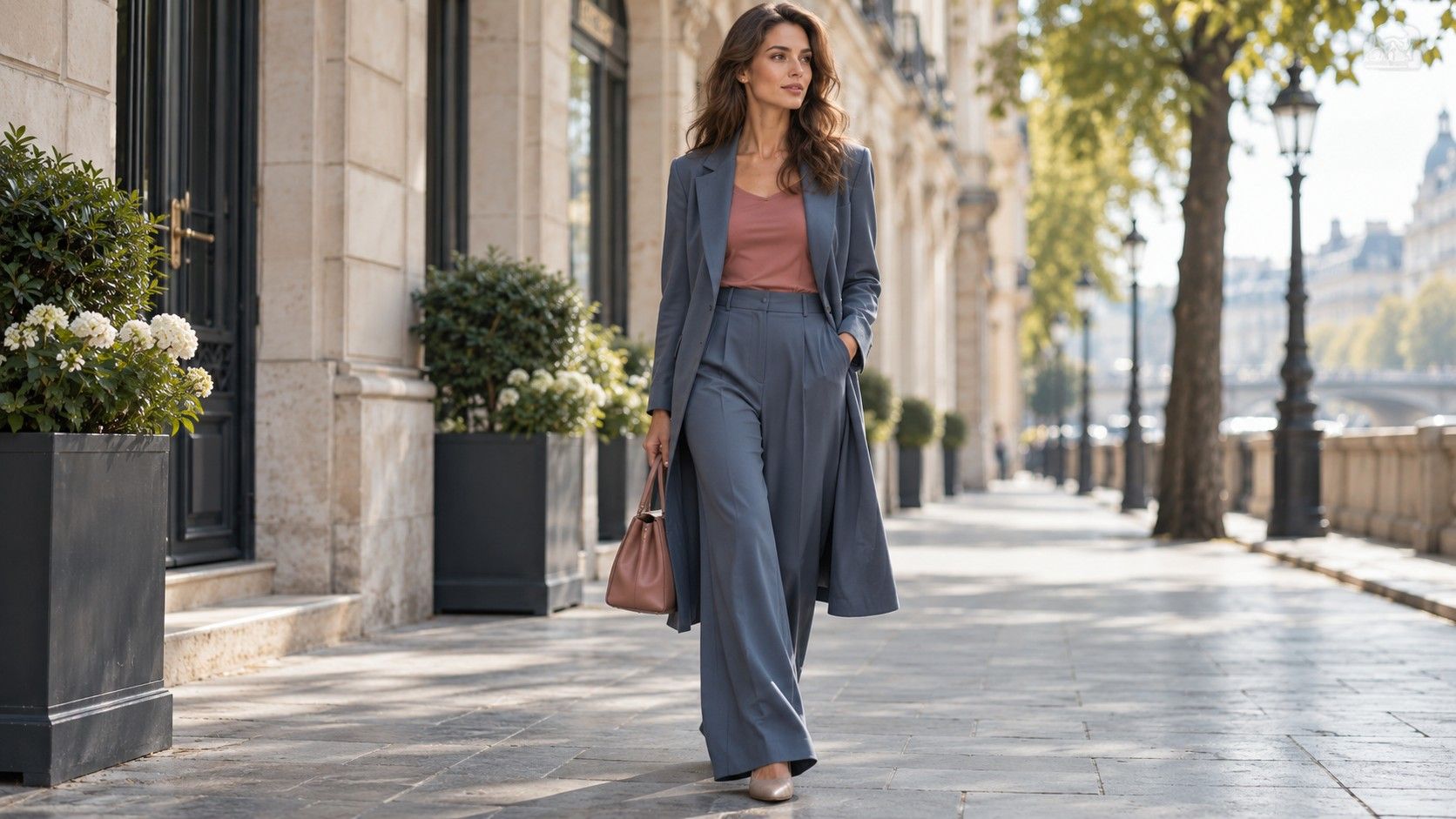
Length is easier to judge when the shoes, top and outer layer are all visible. Try straight or wider trousers with the shoes needed for the day, then add a top of a different length. A long jacket over a long top may create a continuous effect you enjoy, or too much fabric around the hips. Compare it with a simpler top before changing the jacket.
A tonal combination can connect pieces without exact matching. Try medium-grey trousers with a slightly lighter grey-blue top, then compare a stronger light-dark division. You might like the quiet transition for one outfit and the sharper break for another. There is no obligation to build an uninterrupted column of colour every day or to make the body appear taller.
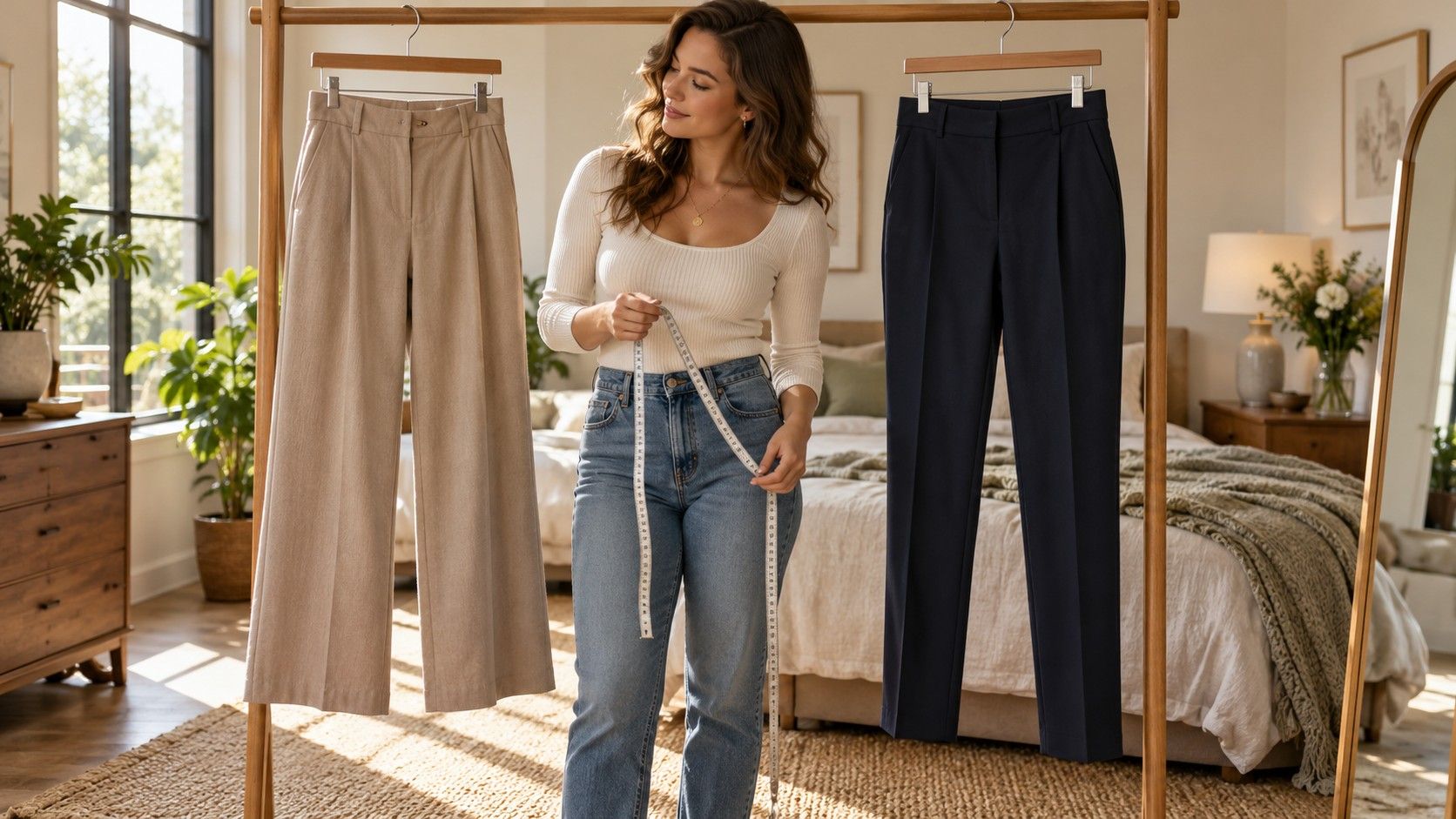
Trouser length must work while walking. Check the back hem for dragging, the front for catching on the shoe and the seat for enough room when you sit. A wide leg that looks elegant in a still pose can sweep up rain or become awkward on stairs. A slightly shorter version may be more useful for a commute, regardless of the visual inspiration.
For skirts and dresses, compare the line in motion rather than assuming longer is better. A midi skirt may need a vent or more width for a full stride. A longer dress in a fluid fabric may move easily but require different underwear or shoes. Pay attention to those practical conditions before deciding whether a continuous outline belongs in your regular wardrobe.
Use texture to give muted colours definition
Quiet colours can look varied when their surfaces differ. Try a smooth jersey top with textured trousers, a fine knit under a woven jacket, or matte fabric beside a slightly lustrous bag. Keep the colour combination familiar while making the change. This lets you decide whether the surface difference adds interest or simply feels distracting.
Texture does not have to mean heavy fabric. A lightly slubbed shirt, fine rib or subtle woven pattern can provide variation without the warmth of a chunky knit. In warm weather, check lining and fabric weight as well as appearance. A textured jacket might be a useful winter layer but an impractical way to finish a summer outfit.
If the combination seems fuzzy or indistinct, add one cleaner surface rather than several bright accessories. Smooth leather shoes or a simple woven shirt may provide enough definition. Conversely, if everything feels too crisp for your taste, try a softer layer with the same colour relationships. You are adjusting the clothes, not compensating for a perceived bodily flaw.
Prints deserve the same individual comparison. A large low-contrast pattern may read quietly from a distance, while a small dark-and-light pattern can look busier. Hold the fabric at arm’s length and then look in a full-length mirror. The word soft does not require tiny florals, and the word flamboyant does not require oversized motifs. Wear a pattern because you enjoy the complete result.
Build a small rotation that fits different days
For a casual day, test a fluid shirt over a comfortable vest or T-shirt with straight jeans and walking shoes. The shirt can supply movement while the base stays simple. Check the outfit with your bag packed: its weight and strap placement may pull the neckline or flatten the open layer. An empty bag in a fitting-room photograph does not reproduce that effect.
For work, try an unlined jacket with trousers and a simple knit in related colours. Sit as you would at a desk and reach forward. A relaxed jacket still needs enough room through the back, while very loose sleeves may catch on a chair or bunch over your hands. Compare another sleeve or cuff before deciding that you need a more fitted outfit overall.
For a smarter evening, try a dress with an easy continuous line and an accessory that adds the amount of contrast you enjoy. A pendant, earrings or shoes can do that job separately. Put on one, look at the complete outfit and stop if it already feels finished. There is no need to reproduce every accessory from a reference photograph.
Choose one outer layer that works over at least two of those outfits. Test the sleeves together and check where each hem lands. A coat that crushes a shirt sleeve or a jacket that catches on a dress tie may be useful elsewhere but awkward here. A small rotation becomes easier when layers cooperate physically, rather than merely sharing colours in a picture.
After wearing the combinations, note the specific results: the longer shirt stayed comfortable, the trousers caught on wet ground, the dusty blue worked with both jackets, or a bag strap needed adjusting. Keep the successful details and change the troublesome ones. Flamboyant Natural Soft Summer inspiration is most useful when it leads to clothes you can wear without continually thinking about the labels.