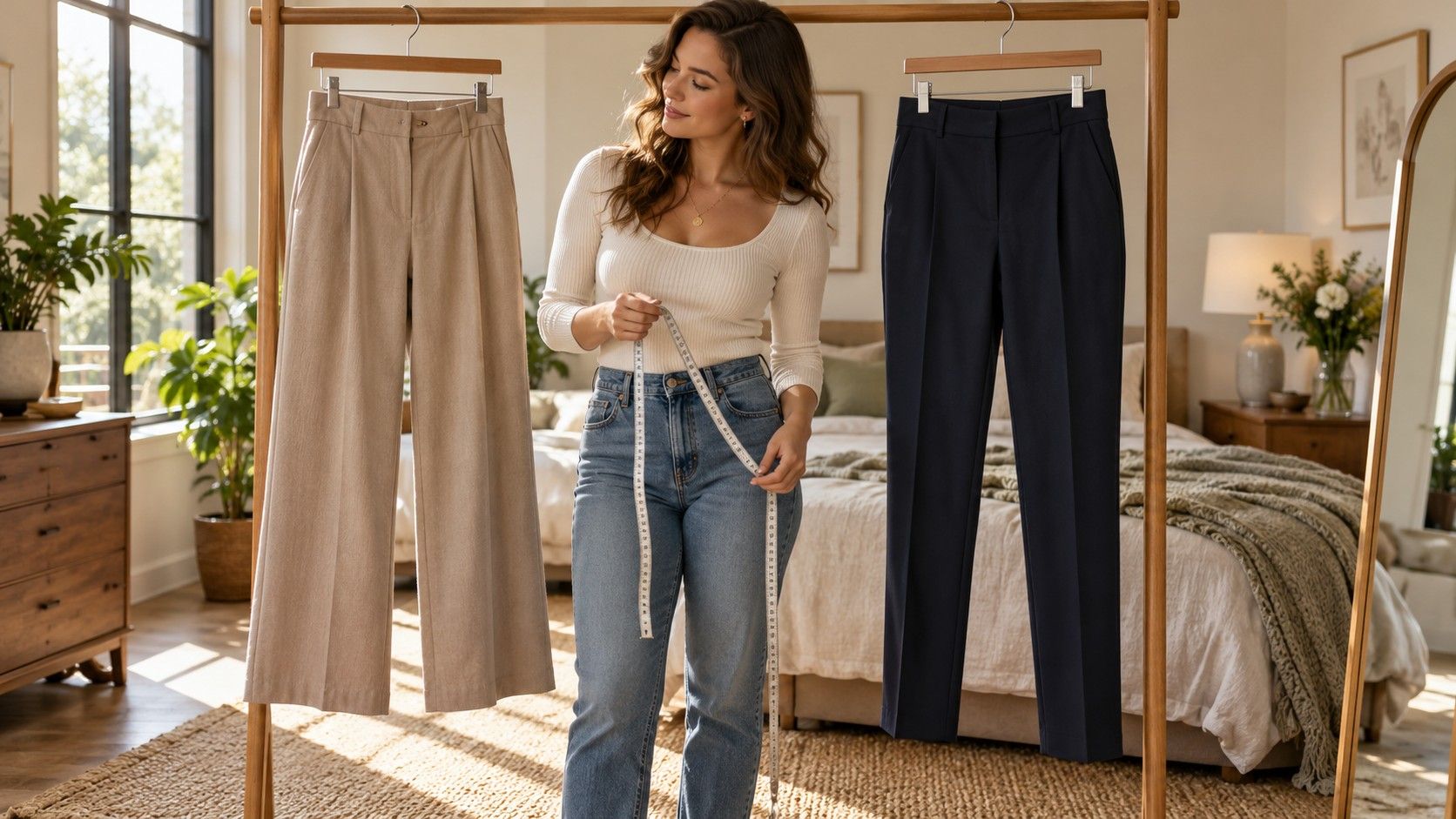
A pair of jeans can fit through the hips and still gape at the waist, or look right standing up and become uncomfortable on a chair. Searching for jeans for body shape is a reasonable starting point, but the useful details are more specific: waistband position, room through the seat and thighs, denim behaviour and the line of the leg. Work through those details separately and the fitting-room choices become easier to explain.
Choose the rise by comfort and proportions
The rise describes the distance from the crotch seam to the top of the waistband, with front and back rise measured separately. A high-rise label does not promise the waistband will meet your natural waist. The same number can sit differently depending on torso length, seat shape and the pattern. Begin with where you want the waistband to sit, then try the garment rather than relying on the label alone.
Fasten the jeans without pulling the waistband into an artificial position. Walk a few steps, sit and stand, then see where they settle. If you repeatedly pull them upwards, the rise, size or overall cut may be unsuitable for the placement you want. If they press under your ribs when sitting, test a lower waistband or a differently shaped high rise instead of assuming you need to tolerate it.
Pay attention to the back as well as the front. A waistband that feels comfortable standing may slide down at the back when you sit. Another pair with a different back rise or seat curve may behave better even if both are sold as the same rise category. The number printed on the product page cannot describe the whole curve from the front through the legs to the back.
Compare two rises using the tops you actually wear. A cropped shirt, a tucked blouse and a long sweater reveal different amounts of the waistband. You may like a lower rise with one outfit and a higher rise with another. This is a proportion preference, not a permanent rule attached to your body. Take a photo for reference if helpful, but give the seated comfort test equal weight.
Solve a waist gap without sizing down blindly
A gap at the back can mean the waistband is too large relative to the hips and seat for that particular pattern. Sizing down may reduce the gap, but it can also remove room where you need it. First check whether the current pair fits comfortably through the fullest hip and thigh. If it already pulls there, a smaller size is unlikely to solve the whole problem.
Try a different hip-to-waist cut, sometimes described by brands as curvy, contoured or a similar term. Those words are not standardized, so treat them as invitations to compare. A more shaped waistband or a different distribution of room through the seat can help. It is possible to need that cut in one brand and prefer the standard cut in another; the names describe their product ranges rather than a universal body category.
A belt can hold a slightly loose waist, but look at what happens to the fabric underneath. If it gathers into folds, pulls the fly sideways or creates uncomfortable pressure, it is hiding a mismatch rather than improving fit. Test the jeans with the belt you intend to wear. A waistband that behaves only with a very tight belt may become annoying during a full day.
When only a modest waistband adjustment seems necessary, ask a tailor to inspect the jeans before you commit. Taking in the back can affect belt loops, the yoke and pocket placement, and thick denim or decorative stitching may complicate the work. There is no reliable alteration price or maximum adjustment that applies to every pair. A fitting with the actual garment is more useful than an online promise.
Check seat and thigh fit in motion
Sit on a chair, take a comfortable stride and bend as you would to pick up a bag. Check for pulling at the fly, pressure across the thighs and a waistband that digs in. Denim can crease with normal movement, so a wrinkle is not automatically a fault. Look for a combination of restricted movement, distorted seams or fabric stretched tightly where you want room.
Inspect the seat without trying to erase every fold. A relaxed jean is designed to contain spare fabric; a fitted one will sit closer. Excess fabric under the seat can come from a pattern mismatch, while tension can come from insufficient room or a different curve than you need. Trying another size is informative, but comparing another cut may solve the issue with fewer compromises.
Check pockets while standing naturally. Front pockets that pull open can signal tension or a pocket shape you dislike. Back-pocket placement changes the appearance of the jeans even when comfort is identical. Decide whether that detail matters to you, and keep it separate from fit. A preference for smaller pockets or a higher placement does not mean the rest of the jeans are objectively wrong.
Read the fabric and care information. Stretch denim can feel easy immediately, while rigid denim has a firmer structure, but neither category guarantees a particular amount of relaxation. Do not buy painful jeans on the promise that they will inevitably stretch into place. If a store allows an extended indoor try-on before returns, follow its conditions and keep tags attached while checking how the fabric feels after ordinary sitting.
Compare leg shapes using the same shoes
Once the waistband, seat and thighs are comfortable, compare the leg line. Straight jeans may fall close to the leg or have considerable width depending on the brand. Tapered styles narrow towards the ankle; wide legs carry more width downwards; bootcut and flared styles widen below the knee to different degrees. These descriptions leave room for many variations, so inspect the actual silhouette.
Use the same shoes for the comparison. A long wide leg over a boot can look and behave differently from the same jeans folded above a trainer. Check the hem while walking, including whether it drags or catches under your heel. If you intend to alternate between flat shoes and taller heels, decide which length compromise you can live with before buying.
Change one feature at a time when possible. Comparing a high-rise cropped straight leg with a low-rise full-length flare makes it hard to know which detail drives your preference. Try two similar rises with different legs, or the same style in two lengths. The outfit comparison should answer a practical question, such as whether a wider hem works with your everyday coat and shoes.
Shape advice often frames leg cuts as ways to balance particular proportions. You can use that idea as an optional styling experiment: compare a narrow ankle with a fuller hem and see which line you enjoy. You do not need to make your upper and lower body appear equal in width. A dramatic flare, a slim ankle or a roomy barrel shape can be a deliberate personal-style choice rather than a correction.
Watch fabric drape along the leg. A heavier denim may hold a wide shape away from you, while a softer cloth falls closer and folds differently around the knee. If one wide-leg pair feels awkward, try a different denim weight before dismissing the silhouette. Width, stiffness and length work together; the marketing name alone cannot tell you what will happen.
Decide what a tailor can reasonably change
A hem adjustment is often a straightforward starting point, but inspect the design. Shortening a flare can remove some of its widest section, changing the final opening. An original distressed hem may be worth preserving, and a raw hem can behave differently after cutting and washing. Explain which detail you want retained and ask how the alteration will affect the leg line.
A small waist adjustment may be feasible when the rest of the jeans fits well. Large changes can shift pockets, disturb the yoke or leave the waistband and seat working against each other. Altering the rise or crotch curve can be much more involved than moving a button. Do not treat tailoring as an unlimited rescue plan for a pair that is uncomfortable in several places.
Bring your intended shoes to a hemming appointment and wear the jeans at the waistband position where they naturally settle. Marking a hem while holding the jeans unusually high can produce the wrong length later. If the denim has specific shrinkage or washing instructions, discuss them with the tailor before cutting. Follow the manufacturer's care guidance rather than applying a generic washing rule to every fabric.
Keep a purchase record for successful pairs: exact style name, size, fabric composition, rise and inside leg, plus any alteration. Add one sentence on comfort after wear. Product names can stay similar while fabrics or cuts change, so this record is a reference, not a guarantee. On the next shopping trip, start from the details that worked and repeat the movement checks. A clear fit note is more useful than remembering that a pair was supposedly right for your shape.