A neat outfit can feel too formal, while an entirely relaxed one can seem unfinished to the person wearing it. Soft Classic and Soft Autumn ideas offer one way to explore that middle ground: measured proportions, gentle shaping and quieter colour. The labels are optional style language. They cannot diagnose your body, and they do not decide what you are allowed to wear.
Translate the labels into choices you can compare
Soft Classic is an image identity within the Kibbe framework; Soft Autumn is a seasonal-colour label used in some other styling systems. Their shared word soft does not make them one combined official classification. A person exploring an image identity still needs to consider colour separately, and a colour preference says nothing reliable about body proportions.
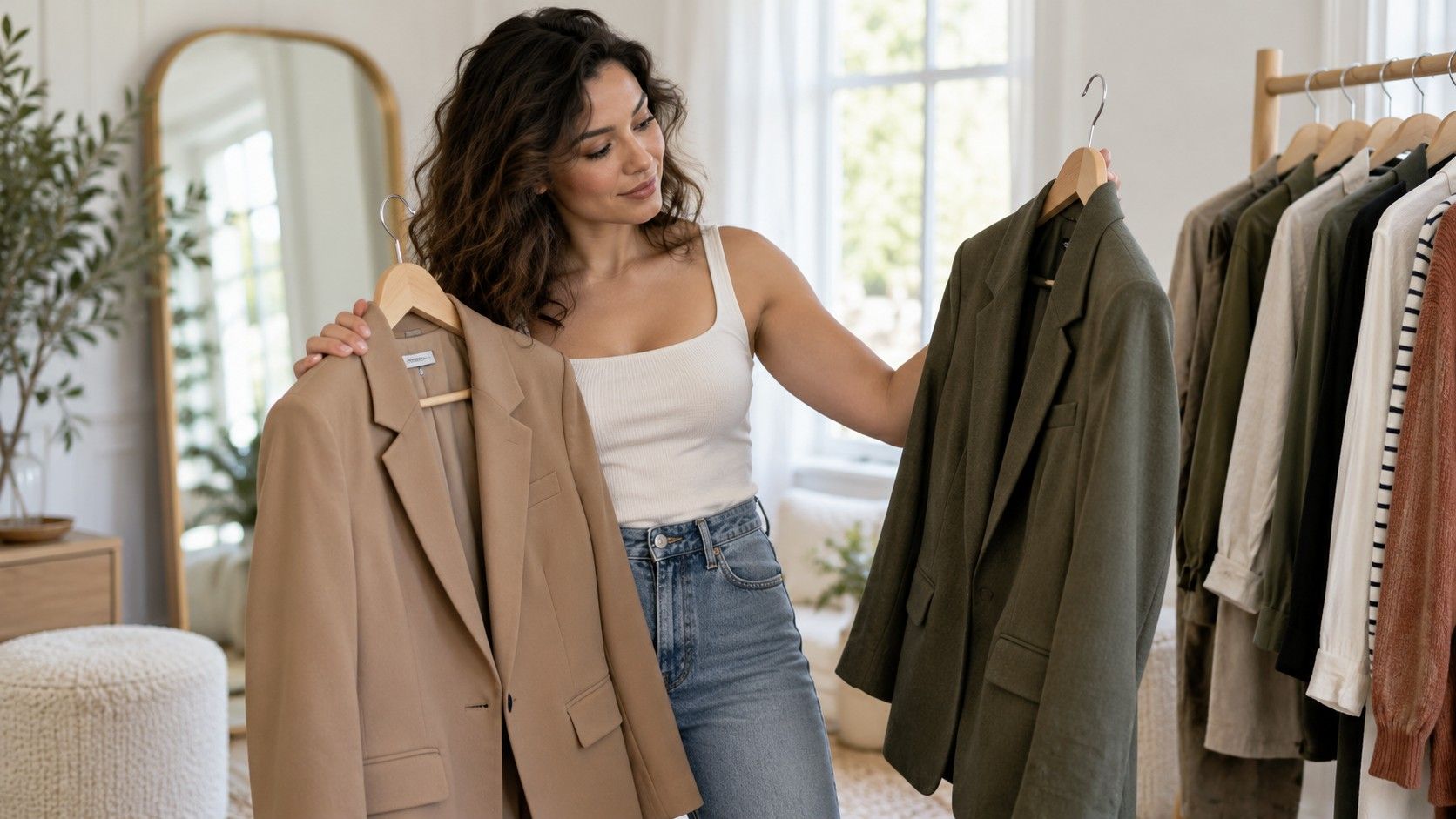
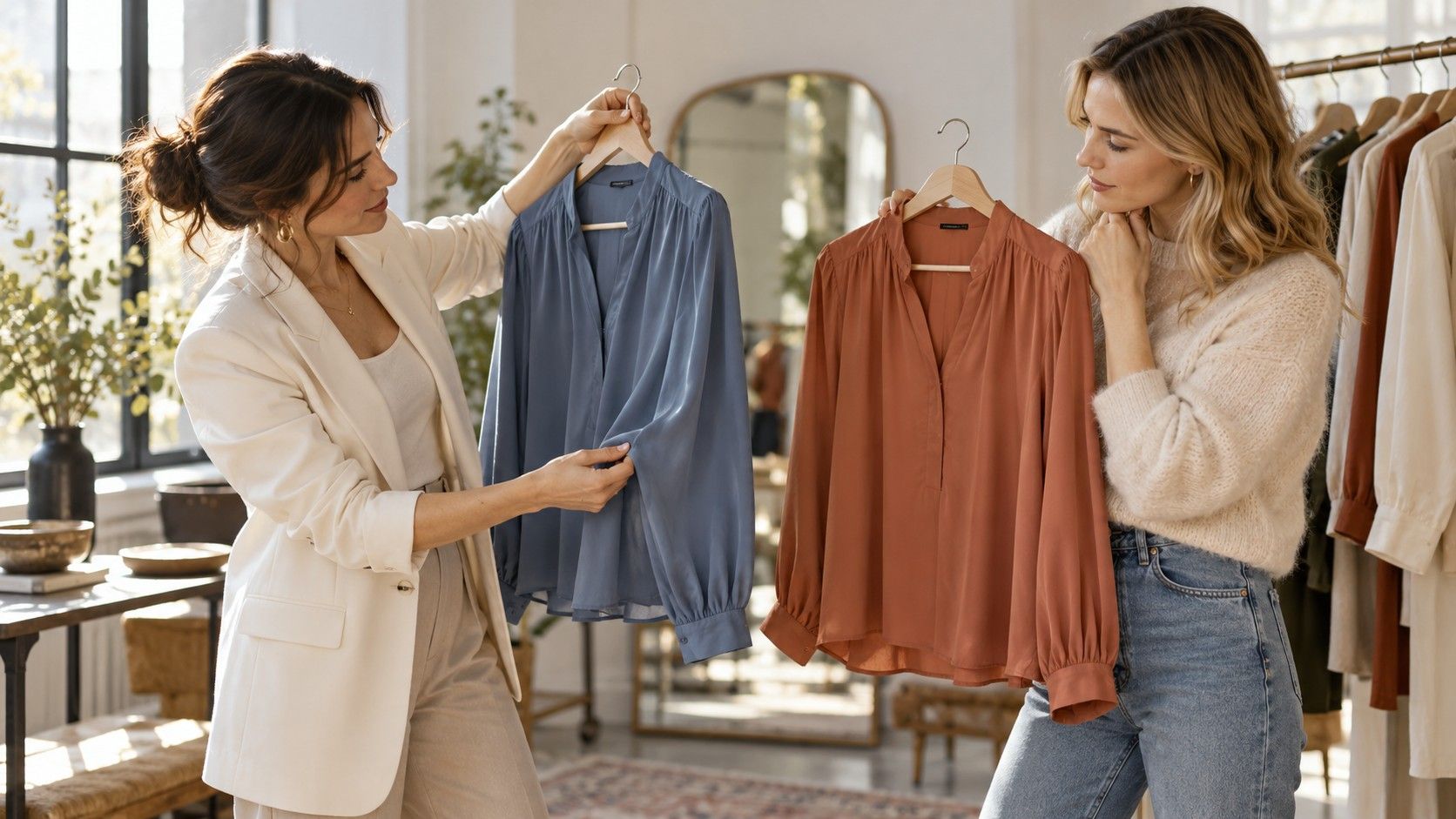
Use the combination to set up practical comparisons. Try a gently shaped shirt beside a very oversized one, or a quiet medium-toned colour beside a clearer version. Keep the trousers and shoes unchanged. This approach shows you what a difference in cut or colour actually does within an outfit, without requiring you to prove that a label is correct.
Balance is a subjective impression, not a ratio you need to calculate from a photograph. You may prefer a top with a tidy shoulder, a skirt that moves lightly or accessories that do not compete with each other. Another person using the same labels may prefer different details. Choose observations you can repeat in your own clothes rather than a checklist of supposedly ideal measurements.
If a favourite item falls outside the suggested direction, wear it in the comparison. A graphic T-shirt or oversized coat might provide exactly the personality you want. The useful question is how to combine it comfortably, not how to erase it. The outfit can be coherent without every item sharing the same mood.
Try a calm palette without making the outfit flat
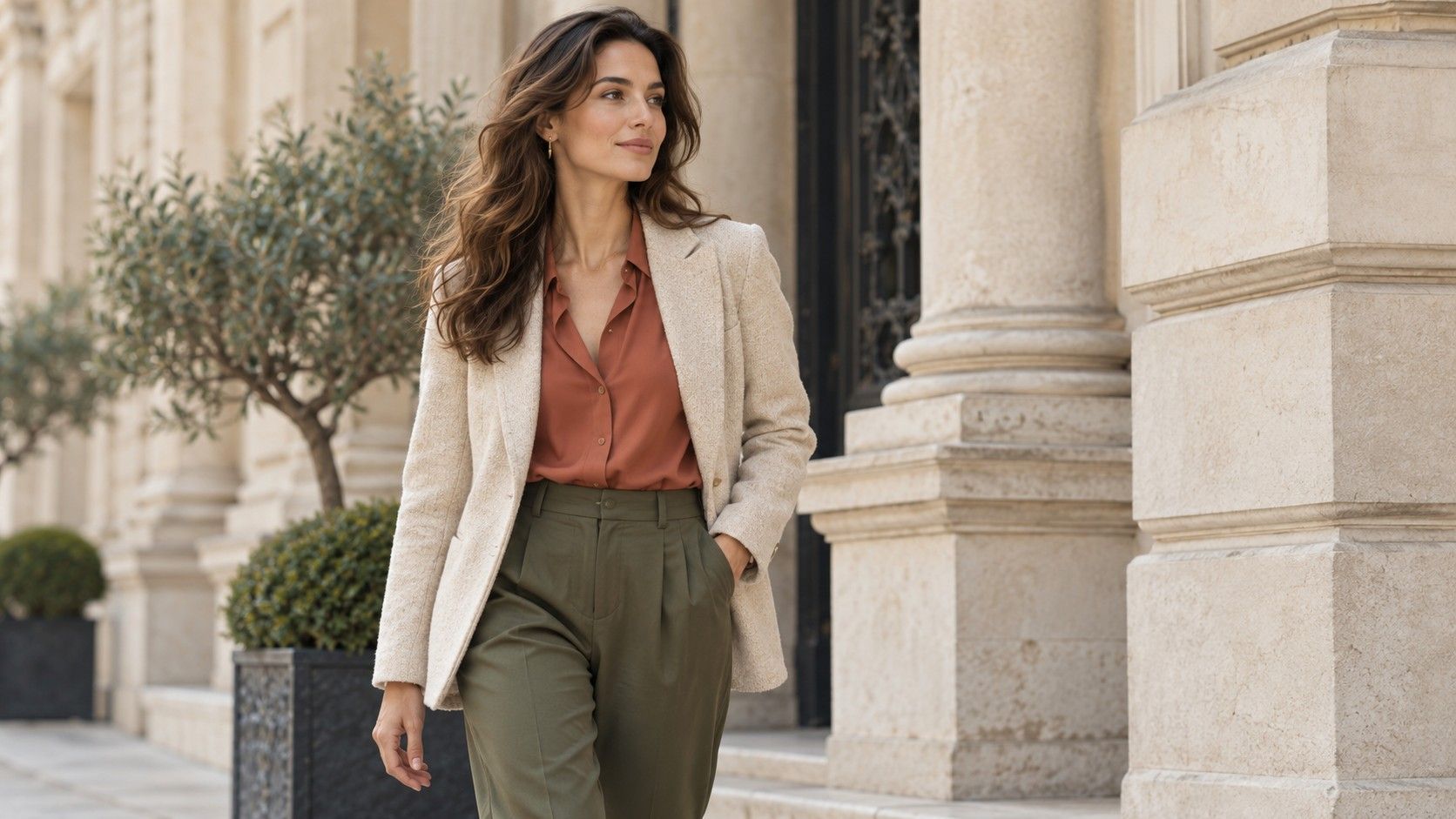
Soft Autumn palettes are commonly described as muted with a warm tendency, although different systems draw their boundaries differently. Treat warm grey, muted olive, subdued brown or soft cream as possibilities to compare, not a prescription. The appearance of a fabric changes with its surface, surrounding colours and light; a shop name cannot guarantee how it will look beside your face.
Start with two pieces you already wear together. Add a third colour with a similar level of lightness and see whether you like the quiet transition. Then exchange one piece for a noticeably lighter or darker one. You may prefer a little more definition at the collar, waist or shoe. Calling a palette soft does not oblige you to eliminate all contrast.
If a tonal outfit looks dull to you, check its condition and surface before buying an accent. A fine knit with pilling and unpressed trousers can make a pleasant colour pairing seem tired. A clean shoe, a steamed collar or a smoother top may change the effect more than a new necklace. Useful care is part of outfit building, not evidence that the colours were wrong.
Compare warm and cooler-looking alternatives near your face in similar daylight if you want to explore colour further. Keep the makeup and background consistent, and regard photos as reminders rather than exact measurements. Skin tone, hair colour and camera settings do not establish a colour season by themselves. The goal is a group of colours you enjoy using together.
Check the proportions of separates while moving
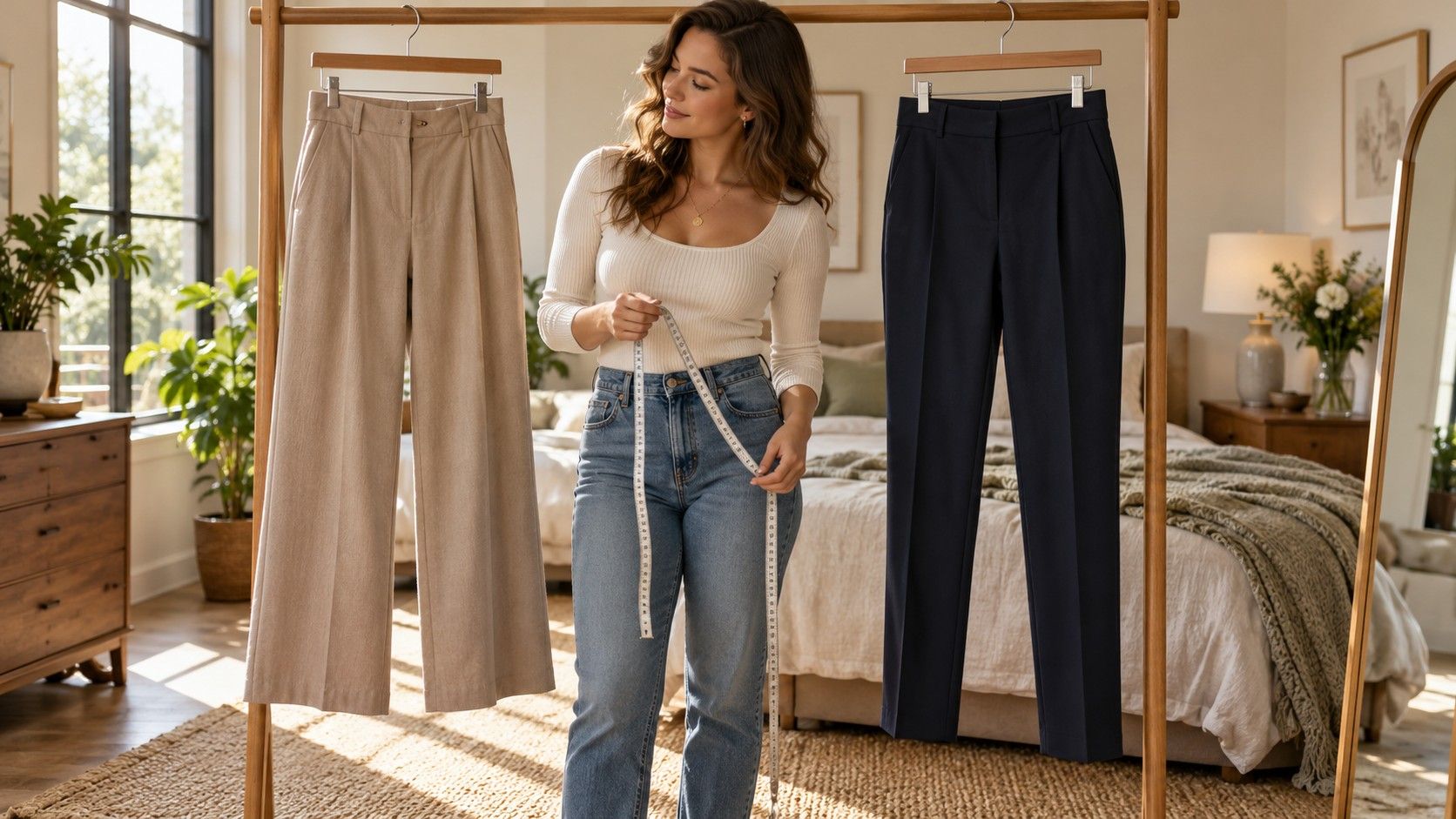
A blouse and trousers can each fit well yet meet awkwardly at the waist. Try the blouse loose, fully tucked and lightly tucked at the front. Check whether the waistband remains comfortable after sitting. A neat tuck may give the tidy finish you enjoy, but a top with a different hem can produce a similar effect without extra fabric inside the trousers.
For an outfit inspired by gentle balance, compare a regular-length cardigan with a very cropped or long one over the same skirt. Look at the sleeve volume, the hem and the shoes together. The middle option is not automatically best; it is simply a useful reference. You may find that a longer cardigan looks pleasing when worn open, or that a shorter one works well with the skirt you own.
Check garment ease through the shoulders and torso before judging whether the outline seems polished. A narrow armhole, tight sleeve or waistband digging in can make someone stand rigidly in the mirror. Cross your arms, reach for a bag and take a normal stride. Comfortable movement should survive the styling experiment.
If proportions still feel awkward, adjust a single point. Turn back a cuff to reveal the wrist, change the top length or try a different shoe shape. Take a quick full-length reference photograph from a level position if helpful. Avoid exaggerated camera angles and do not judge the body from the picture; compare only the arrangement of garments.
Choose gentle shaping in a dress for the actual occasion
Look first at where the dress is shaped. Darts, curved side seams, a tie and a waist seam create different kinds of definition. A dress may appear relaxed from the front and pull across the back. Try it with the underwear and shoes you expect to wear, then inspect how it behaves after sitting down and standing again.
A softly structured dress with a little waist shaping is one possible starting point. Compare it with a straighter cut and a more closely fitted one if you can. Notice whether the fabric falls smoothly or catches, whether you like its movement and whether you have to rearrange it. Gentle shaping does not mean choosing a smaller size or making every line of the body visible.
For a workday, consider a neckline that stays comfortable when you lean over a desk and sleeves that fit under your jacket. A dress with a delicate tie can look appealing yet become inconvenient beneath outerwear. Check pockets too: if carrying a phone pulls one side down, you may need your bag instead. These details influence wear more than a dress category on a shopping page.
For a dinner or celebration, compare one decorative feature at a time. A softly gathered neckline, a small print or a textured fabric may provide enough interest without additional jewellery. If you enjoy a bolder print, try quieter accessories and see how the entire outfit feels. There are no forbidden patterns; you are choosing how much visual activity you want for that occasion.
Finish the outfit without making every detail a task
Try your normal shoes before choosing a special pair for the look. A trouser hem that sits well over a low heel may drag with flats, and a skirt can feel different with trainers. Select the footwear your day requires, then check the hem in motion. Hemming a frequently worn pair can be useful; buying shoes solely to rescue it is a separate expense.
For accessories, start with one item you like rather than a matching set. A pair of earrings, a watch or a small pendant might be sufficient. Put on the everyday bag and jacket before adding more. If the neckline, buttons and bag strap already draw attention, a necklace may simply be unnecessary, regardless of the style label.
The same principle helps with prints. A small print is an option, not a rule for a supposedly balanced body. Compare its density, contrast and scale within the entire outfit. A larger print with quiet colour may feel calmer than a tiny high-contrast pattern. Decide by the garment in front of you rather than its description.
Build three complete outfits for the situations you repeat most often: a normal workday, a comfortable weekend and a slightly smarter occasion. Note the pieces, the shoes and one detail you would change after wearing them. Search terms such as soft autumn soft classic can supply inspiration, but your own record of comfortable, repeated outfits is the more useful guide when shopping.