An inspiration board full of soft knits and dusty earth colours can make dressing look effortless, until every outfit starts to feel the same. A Soft Natural and Soft Autumn combination is more useful when you treat it as a set of small experiments: find colours you enjoy, compare how fabrics move, and build around the clothes that already suit your daily life.
Build a quiet palette you enjoy wearing
Soft Natural belongs to an image-styling framework, while Soft Autumn is a colour-season name used by some colour analysts. Neither is a scientific body category. The two labels answer different questions, and one cannot establish the other. You do not need a certain waist measurement, shoulder shape or weight to enjoy a muted warm colour combination.
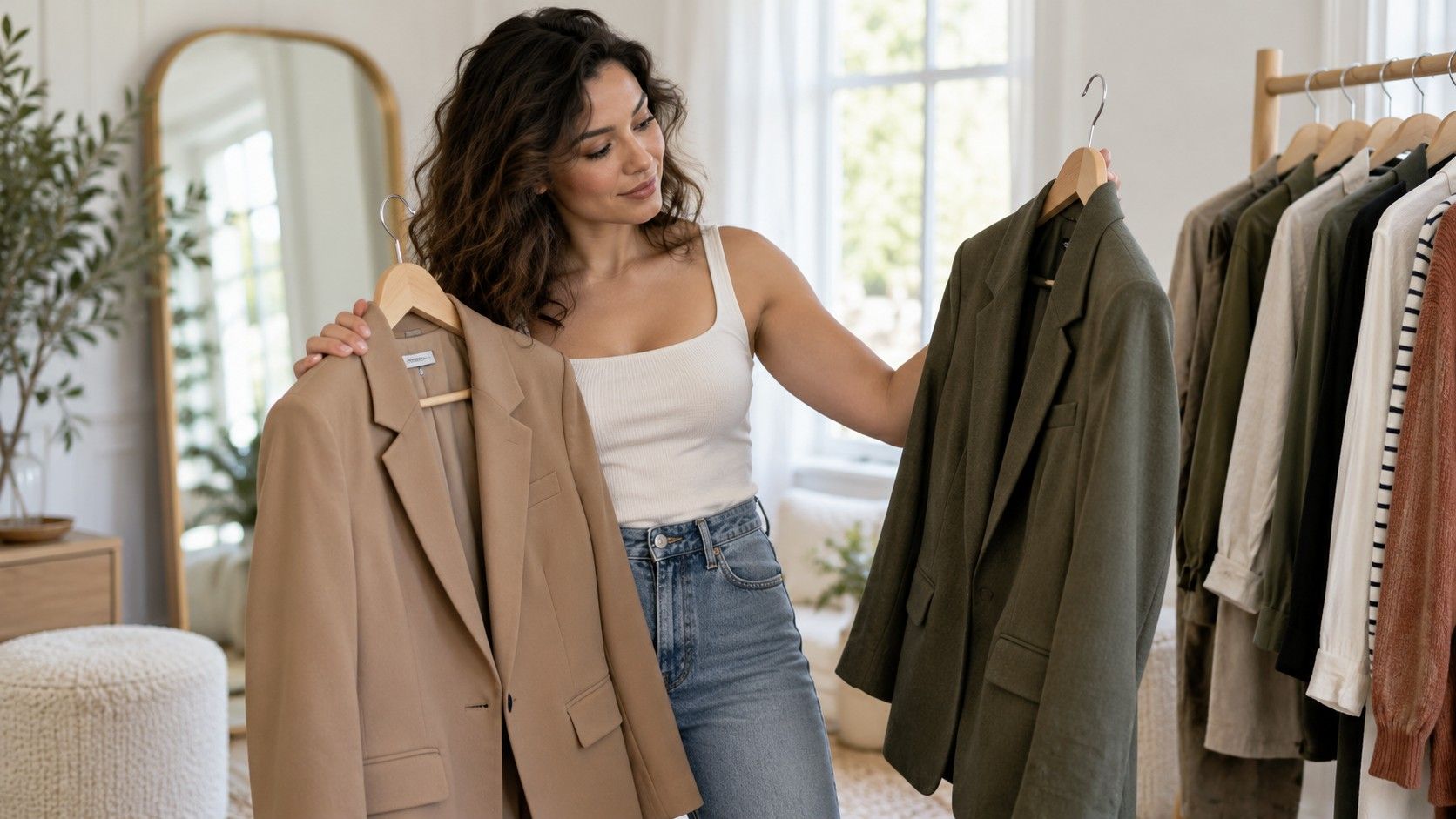
Soft Autumn palettes are often described as muted and relatively warm, though systems differ on their exact contents. Use that description as a place to begin comparing actual garments. Put a warm-looking muted green beside a cooler grey-green, for example, and decide which you prefer with a top you already wear. The product name sage does not tell you which version a shop has supplied.
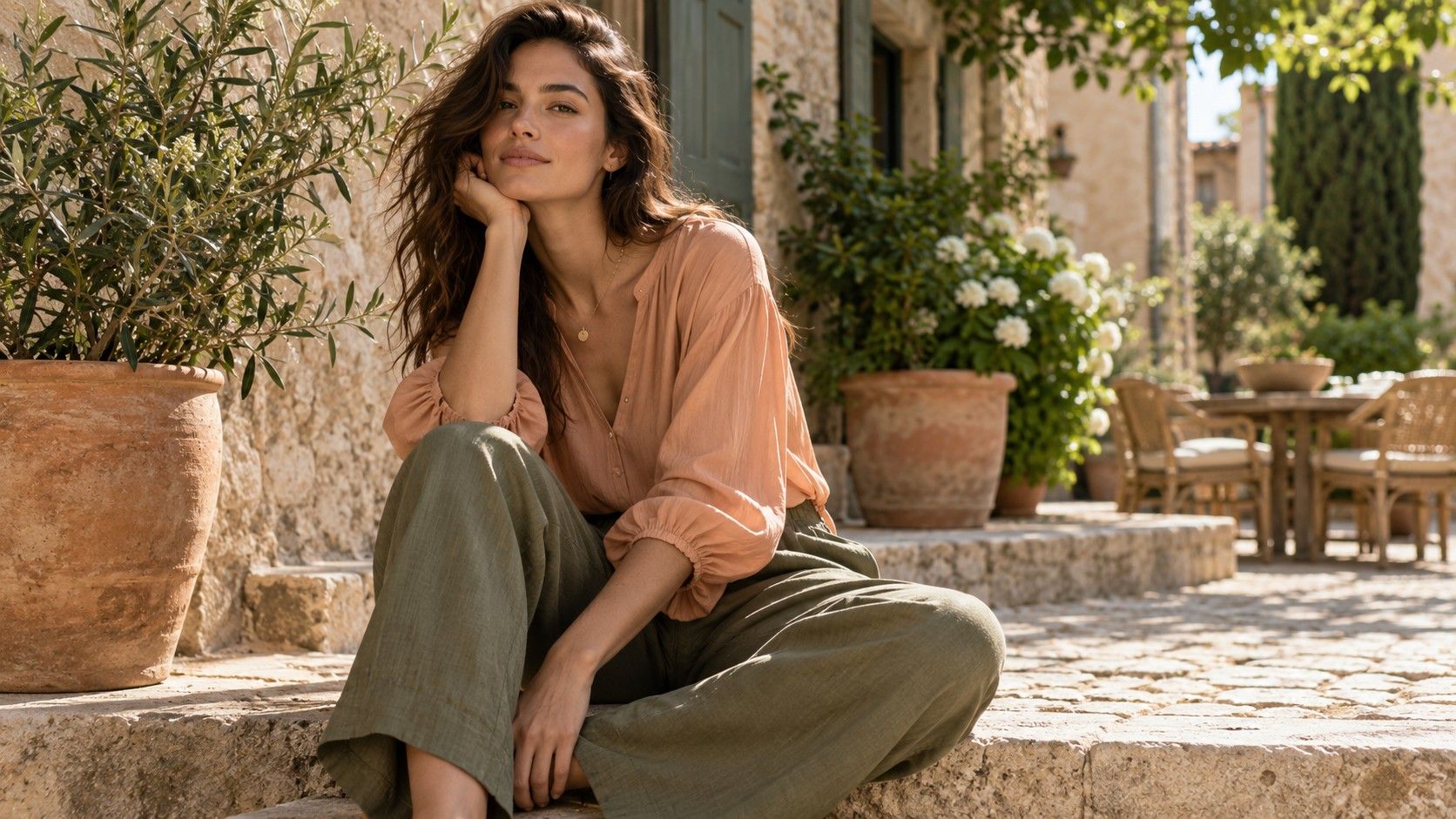
Choose two familiar neutrals before considering accent pieces. You might try a warm grey with brown, or a subdued olive with a soft cream. These are outfit ideas rather than guaranteed personal colours. Check the garments together in daylight, then under the lighting where you will wear them. A pleasing pair in an online photograph can look unexpectedly different in your hallway.
If you enjoy black, white or a vivid colour, keep it in the experiment. Compare its position and area within the outfit: a black bag is a different visual choice from a black high-neck top. A palette should help you use your clothes, not oblige you to discard them. Notice what you reach for repeatedly before setting any shopping rules.
Compare soft fabrics rather than buying a uniform
The word soft can describe colour, texture, shape or fabric behaviour. A muted wool jacket may be visually quiet yet feel stiff; a clear-coloured silk shirt may move fluidly despite its stronger colour. When an outfit disappoints, identify which kind of softness you actually wanted. Replacing a colour will not fix a sleeve that restricts your reach.
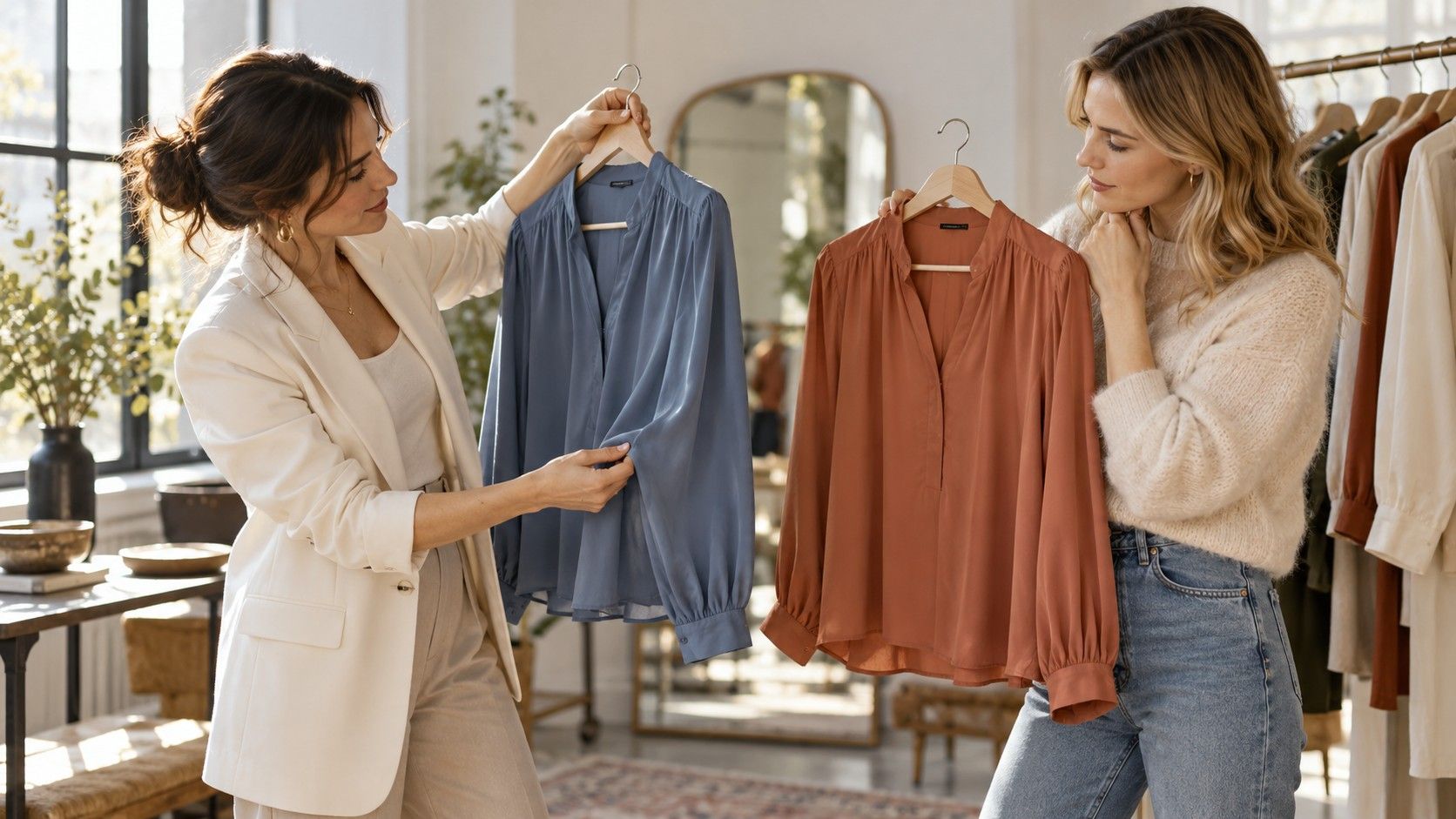
For a Soft Natural-inspired comparison, try an easy woven blouse, a fine knit and a more structured cotton shirt with the same trousers. Lift your arms, cross them and sit down. See which garment returns to a comfortable position without adjustment. A little room through the upper body can feel useful, but excess fabric that slides off a shoulder is not a necessary part of relaxed dressing.
Texture can give related colours enough distinction to remain interesting. Try a smooth top with lightly textured trousers, or a fine knit with a simple woven skirt. Avoid assuming that every piece must be slubbed, brushed, fringed or rustic. Several pronounced textures may feel busy, and some people prefer a cleaner surface against their skin.
Check care requirements at the same time as drape. A hand-wash top that needs drying flat may be less useful for frequent office wear than a washable alternative. Rub a small section of fabric gently between your fingers to assess feel, inspect its lining and read the care label. No style label can predict whether a fabric will suit your sensitivity, climate or laundry routine.
Choose a low-contrast everyday outfit with a clear purpose
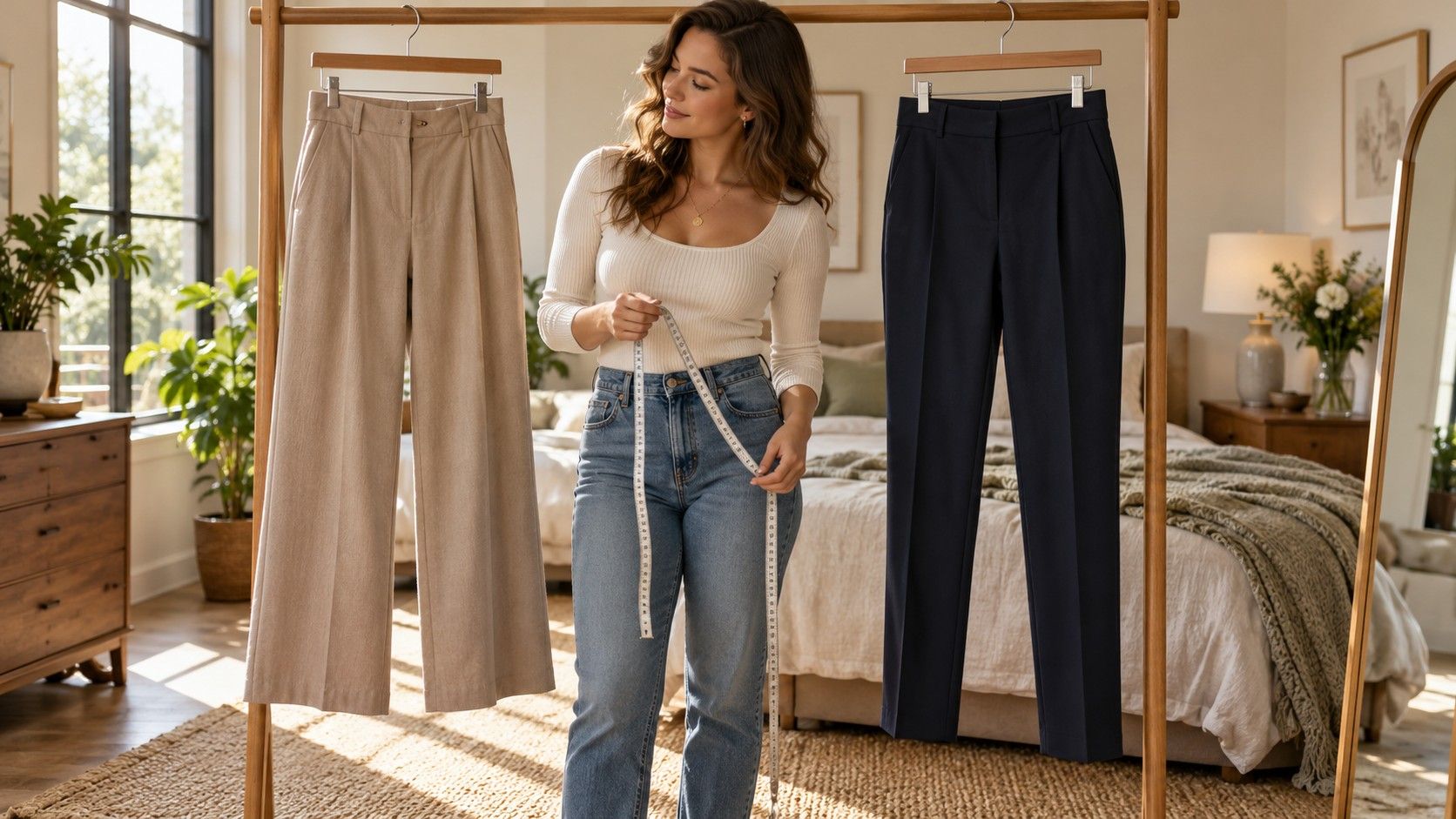
A low-contrast outfit uses neighbouring levels of light and dark, but it need not match every piece exactly. Try medium olive trousers with a muted warm-grey shirt and brown shoes. Stand back from the mirror to assess the whole arrangement, then move closer to check fit. If the colours merge more than you enjoy, add a lighter collar or choose a darker belt already in your wardrobe.
For a casual day, a softly shaped knit with straight jeans offers an easier test than buying a complete seasonal capsule. Compare the knit untucked, loosely tucked at the front and folded slightly inside at the hem. Each version changes where the eye reads the transition between top and bottom. Keep the one that stays comfortable while you walk and sit, rather than the one that needs careful posing.
If the result feels flat, change one surface or proportion before adding several accessories. Roll a sleeve, exchange a very long top for a shorter one or try smoother shoes with textured fabric. You may be responding to a lack of shape rather than a lack of colour. A small difference is easier to understand when the rest of the outfit stays the same.
Use the actual bag and outer layer needed for the day. A crossbody strap can pull a loose neckline off centre, and a large tote may catch on a sleeve with deep gathers. These are construction interactions, not signs that your body belongs to another category. Try another strap position, a different sleeve or a more stable neckline before rejecting a favourite garment.
Make a smarter work outfit without losing comfort
Start with the expected level of formality. A relaxed office may accept a knit and fluid trousers, whereas a client meeting may call for a jacket and more structured footwear. Soft colour alone does not make an outfit casual or formal. Seam placement, pressing, fabric condition and the fit of the whole combination contribute to that impression.
Try a gently shaped jacket over a simple blouse, with trousers that allow you to sit at a desk comfortably. Fasten the jacket and reach towards an imaginary keyboard. If it pulls at the back or the sleeves bunch, compare another cut. Leaving a jacket open can be a styling preference, but it should not be the only way to tolerate its size.
For a tonal work outfit, use a medium neutral for the trousers, a related lighter top and a jacket that brings the two together. A small patterned scarf may do the same job if you like wearing scarves. Do not add one merely because an outfit board shows it. A clean neckline and a pair of earrings can feel more natural when you spend the day leaning over a desk.
A soft dress can also work, provided it remains comfortable after several hours seated. Check the waist seam, the lining and the position of any wrap fastening. If you need coverage when bending or walking, test it with your normal movements. A panelled dress or one with a little shaping through the side seams may provide the effect you like without a tie that needs constant attention.
Use one fitting-room question for each purchase
Name the problem before trying something on. Perhaps you need a top that fits beneath a jacket, trousers that work with flat shoes or a dress for a warm room. Pick that as the main test. A blouse can be a beautiful muted colour and still fail to solve the sleeve problem that brought you shopping.
Bring, wear or photograph the pieces the new item must join. Check the waistband and neckline together, not as separate purchases. Two pleasant neutrals can have different levels of warmth or depth, and you may prefer the contrast rather than a near match. Look at the combination in a full-length mirror with the shoes visible so the lower part of the outfit does not disappear from the decision.
Before removing tags, try the new piece at home for a few minutes within the return conditions. Sit, reach and walk normally, then decide whether it adds a useful outfit. Avoid constructing an imagined future wardrobe around a single awkward purchase. If a top works only after buying a different bra, skirt and jacket, count those needs honestly.
Write down the specific success rather than the identity claim: a sleeve that allows movement, a green you enjoy beside your face, a hem that works with trainers. Repeat those details in future purchases. Soft Natural and Soft Autumn can remain convenient words for a direction you like, while the final wardrobe reflects your preferences, routine and tolerance for maintenance.