Summer dressing becomes awkward when an outfit looks relaxed in a photograph but feels sticky, restrictive or unfinished by lunchtime. Soft Natural summer outfits can be a useful starting point for experimenting with easy fabric and gentle shaping. The label belongs to a subjective style framework; your plans, comfort and the behaviour of the actual clothes remain better buying guides than a checklist.
Start with movement and breathable fabric
A loose silhouette does not automatically make a cool outfit. A dense woven shirt can trap heat despite its generous cut, while a lighter jersey may feel comfortable until it clings after a short walk. Hold a possible purchase up to daylight, feel the weight of its seams and check the lining. A breezy outer layer over a heavy synthetic lining can behave very differently from the unlined version beside it.
Look for enough garment ease to lift your arms, reach into a bag and sit without the neckline pulling backwards. In a changing room, cross your arms and then let them fall naturally. A sleeve that stays caught high on the upper arm needs attention, whatever size appears on the label. Sizing up may help, but a different sleeve shape can solve the problem without adding unwanted fabric everywhere else.
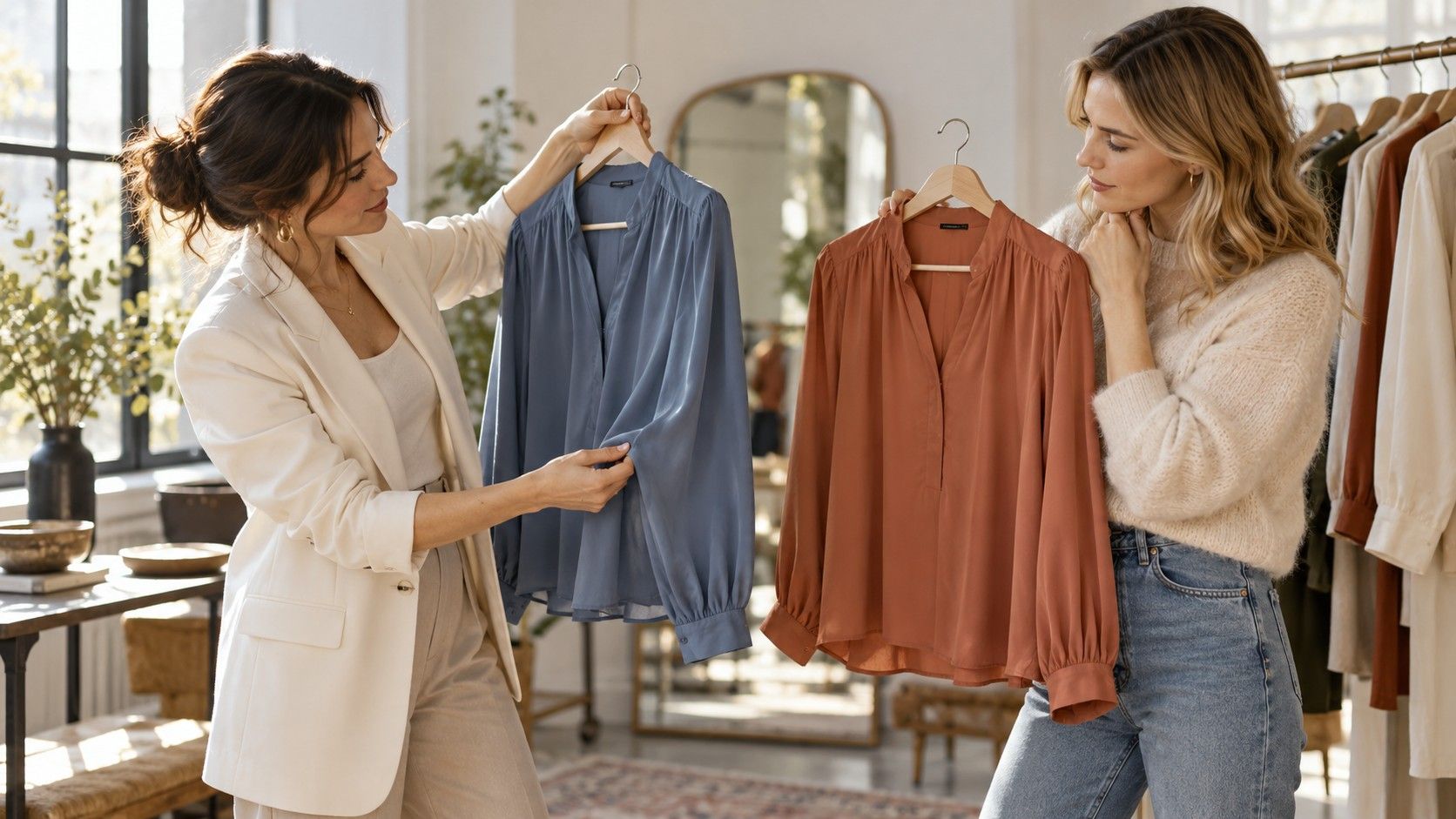
For an experiment inspired by Soft Natural styling, compare a fluid woven top with a rigid boxy one over the same shorts. Observe where each fabric settles and whether either needs constant adjustment. A little shaping at a side seam or a loose tie may provide the definition you like. There is no obligation to expose a waist, wear a low neckline or choose thin fabric if those details make the day less comfortable.
Build an easy daytime outfit around the activity
For errands and lunch outside, try an easy shirt with shorts that have enough room through the seat when seated. Leave the shirt open over a comfortable tank, or fasten it and test a small front tuck. The two arrangements change the proportions without requiring a second purchase. Check the side view as well as the front: a tuck can look tidy facing the mirror yet bunch above a waistband when you turn.
For a long walk, start with the footwear and then choose the hem. A midi skirt that catches between the legs or shorts that ride up will become more annoying with distance. Take several normal strides in the shop rather than judging the outfit with your feet together. If you use fitted cycling shorts for comfort, they can stay; a softer shirt or relaxed overshirt offers an easy styling variation.
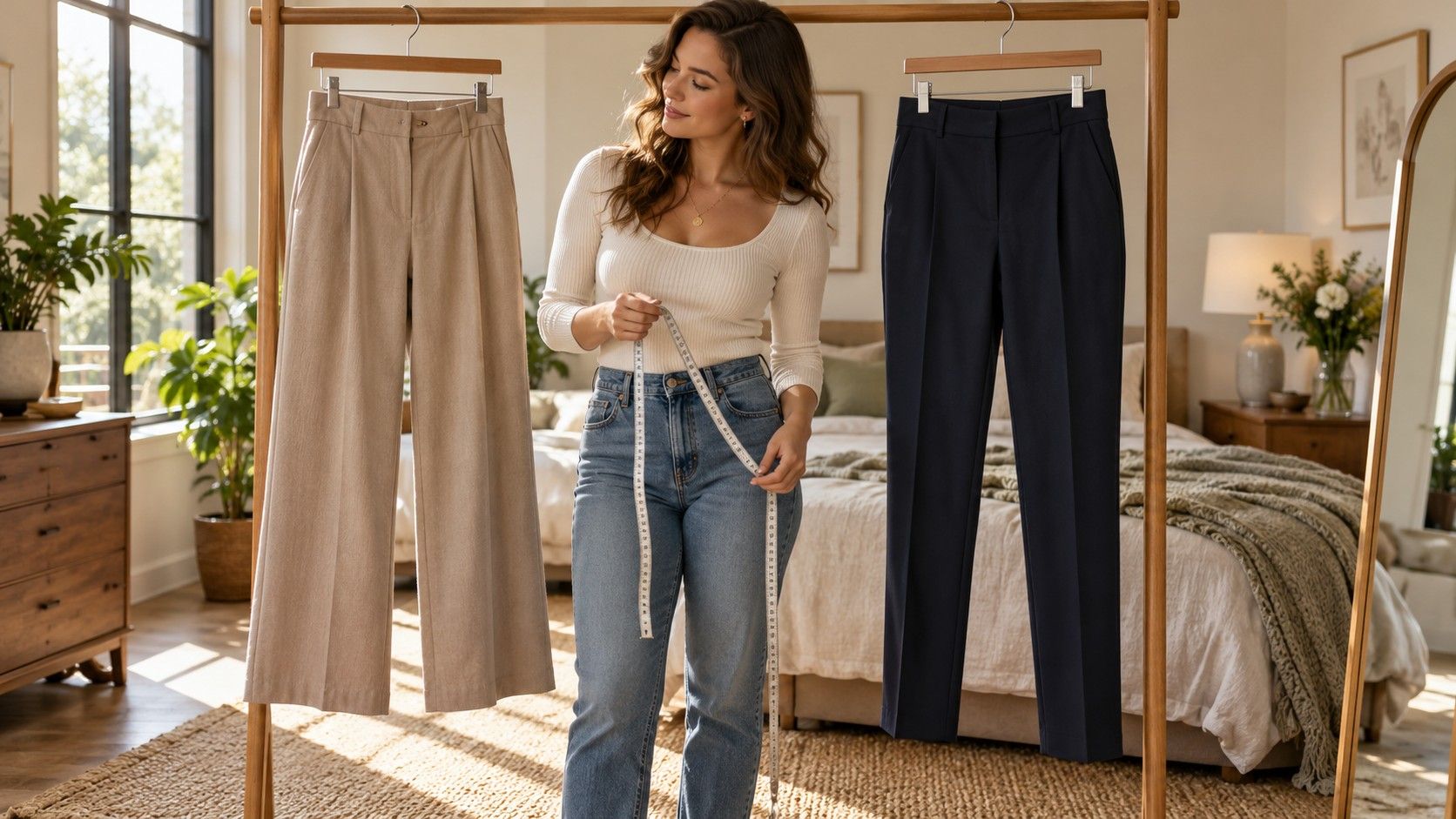
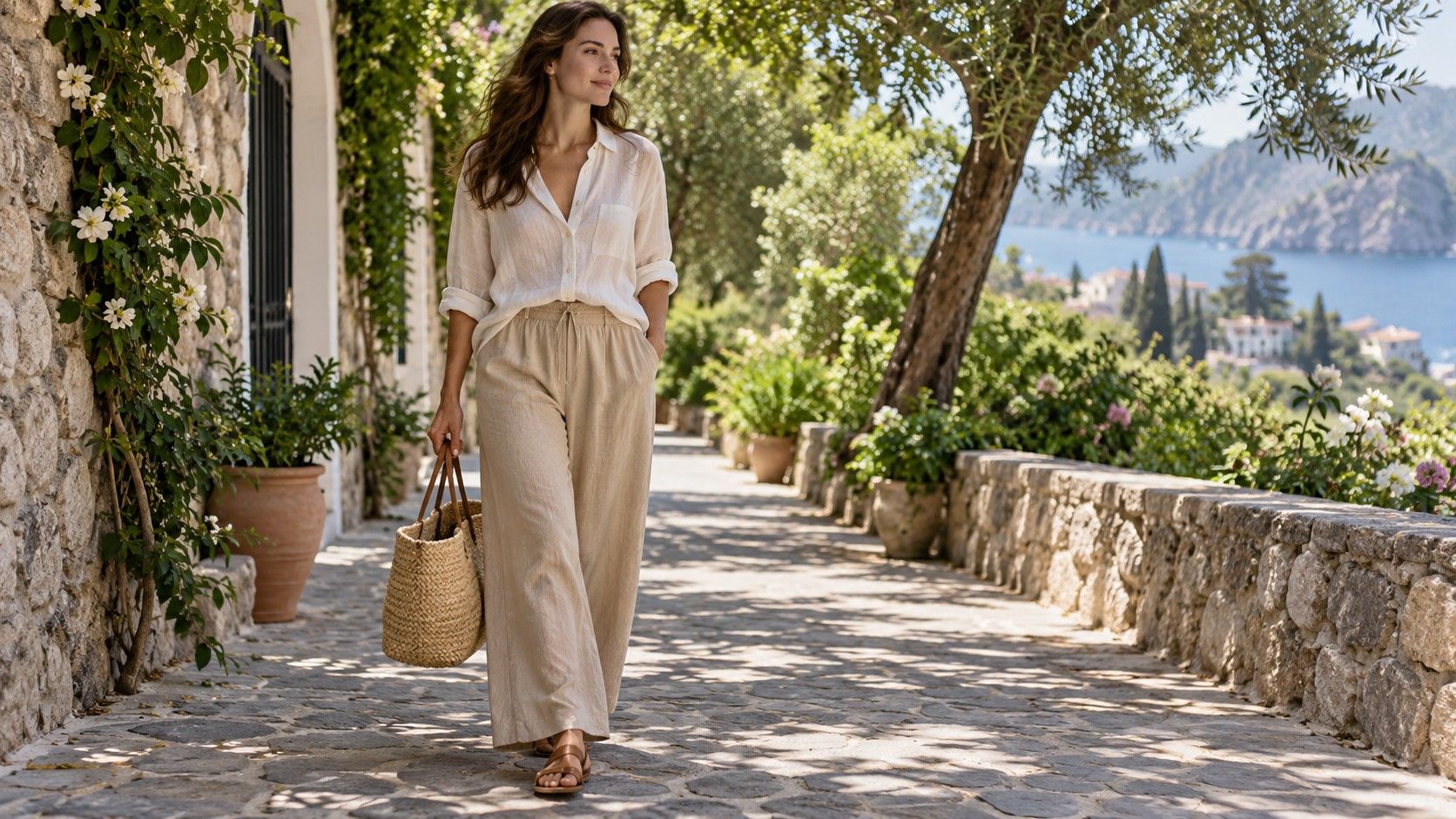
A simple daytime combination is a scoop-neck cotton top, fluid trousers and sandals with secure straps. Treat the neckline as one option, not a requirement of an identity. A crew neck can work just as well when its fabric, fit and styling suit you. Carry your everyday bag during the comparison, because a crossbody strap often changes how a light top hangs and where fabric gathers.
Choose summer dresses by what happens when you sit
A dress can appear softly shaped on a hanger and feel quite structured on the body. Begin with the bust, underarm and upper-back fit, then look at the waist and skirt. If a button placket opens when you sit, extra drape lower down will not solve that tension. Try another size or cut and check whether an alteration would be simple before paying for the dress.
A wrap style is worth trying when you like adjustable shaping, but test its coverage in motion. Walk towards a mirror, sit on a chair and bend slightly as if picking up a dropped ticket. A tie that needs frequent tightening or a neckline that requires a hidden hand all afternoon may be a poor match for your plans. A fixed-wrap design or an easy pull-on dress may offer a similar visual effect with less attention.
Compare a softly gathered dress with a straighter bias-cut or panelled one if those options are available. Notice whether the fabric skims, twists or catches on underwear. The word soft describes a possible visual direction, not a command to choose cling. For a hot commute, a lightly shaped dress with space around the torso may be more useful than a very close fit, even if both look equally good in a still photograph.
Before deciding, check practical details that outfit pictures hide. Can you use the pockets without stretching the side seams? Does a light colour become see-through in direct sun? Will the dress fit under the jacket you actually carry? These questions help distinguish a pleasing fitting-room moment from a garment that will earn regular wear.
A seated test is particularly helpful for a dress with a shaped waistband. Check whether the seam stays at a comfortable height after lunch and whether you can breathe easily without loosening a tie. Choosing more room is a fit decision; it does not mean the suggested style direction has failed.
Handle air conditioning without building a bulky outfit
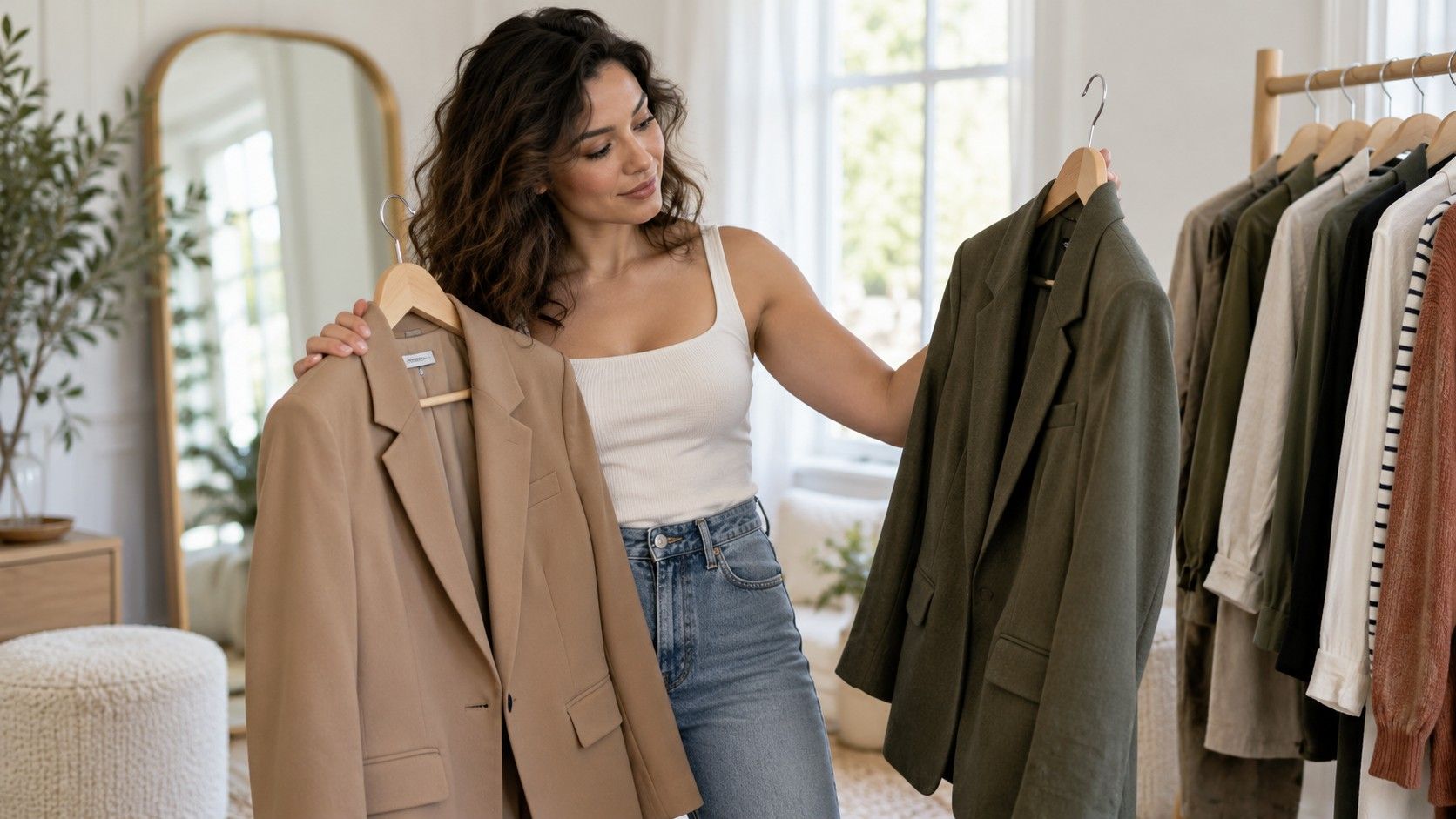
The problem on an office day may be cold indoor air rather than outdoor heat. Try a light cardigan, an unlined shirt or a soft jacket that folds into your bag. Put it over your chosen top before buying either piece. A dropped sleeve under a narrow jacket can bunch at the upper arm, and a long tie at the waist can turn into a lump under a cropped layer.
If an open layer feels untidy, compare two lengths instead of dismissing the idea. A hem just above the hip and one lower on the thigh create different divisions over the same trousers. Neither length belongs exclusively to a body type. Use a full-length mirror, keep the camera level if taking a reference photo, and choose the arrangement that feels coherent with your shoes and bag.
For a smarter setting, test an unlined jacket with enough room to reach forward comfortably. A soft fabric can still have a clean shoulder and neat cuffs. Conversely, a very oversized cardigan may look casual in a way that does not suit your workplace. Think of relaxed dressing as freedom to move within the occasion, rather than as a requirement for every seam and edge to be loose.
Test shoes, bags and finishing details together
Finish the outfit with the shoes needed for the day, not a pair selected only for the mirror. Flat sandals, trainers, loafers and low heels can each change how a trouser hem falls. Check for dragging at the back and enough clearance at the front. If trousers work with only one pair, decide whether you wear that pair often enough to justify the limitation.
A woven bag or textured belt can add interest to plain fabric, but texture is optional. Try your existing smooth leather bag first. If the outfit already has gathers, an open layer and patterned sandals, a quiet accessory may feel easier to wear than another focal point. Take off one item, compare the result and keep whichever version makes the outfit feel intentional to you.
Colour is a separate choice from Soft Natural styling. Summer weather does not mean you have a Summer colour season, and a body or image label cannot establish which shades you enjoy near your face. Wear black, bright colour, pale neutrals or a mix according to your preference. If a colour feels distracting, move it into the shoes or bag while you test an alternative top.
Keep a note after the first real outing: whether the sleeves stayed comfortable, the hem allowed a normal stride and the fabric felt pleasant after sitting. A useful summer rotation might be one dress, two bottoms and three tops that already work with your walking shoes. Repeat the successful combinations. An outfit that survives an ordinary hot day gives you more useful information than a flawless picture taken before leaving home.